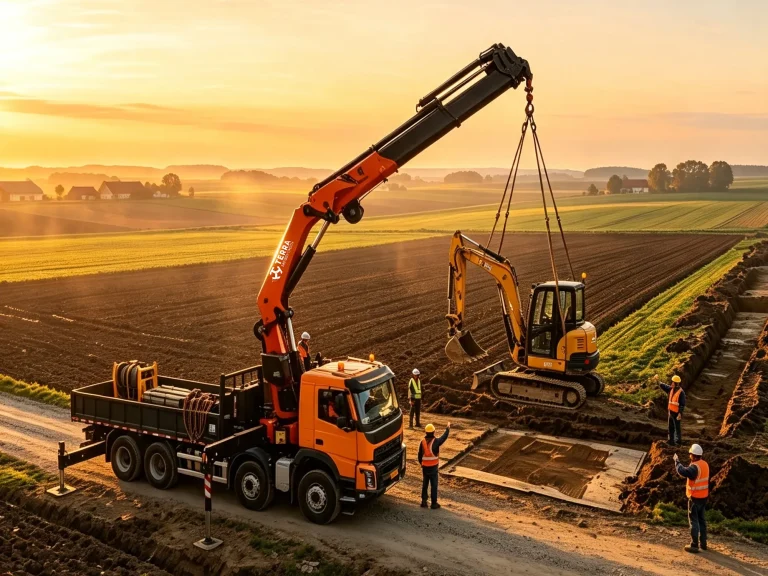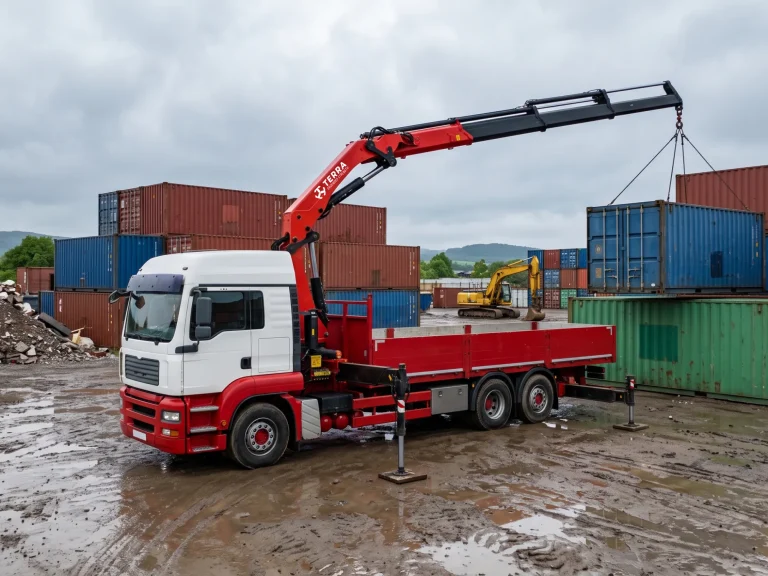
Where this applies: urban construction, municipal cleaning, dredging and drainage work, block and paver yards, quarry and aggregate handling — in dry, dusty, tropical and coastal conditions. Both crane attachment types turn up in the same yards, often on the same afternoon.
Quick answer
They are not alternatives, and that is the first thing to get straight. A clamshell grab digs into loose bulk — sand, gravel, sludge, silt — and closes around it. A brick clamp grips a stack of units between two flat faces and holds them by friction. Buy by material, not by price. Then check three numbers: jaw opening against your largest lump, rated capacity against bulk density, and hydraulic flow against the cycle time you actually need.
Tell us the material and the crane you already have. We come back with the attachment type, the size that fits your working radius, and the hydraulic requirement — within 2 working days.
Match an attachment to my craneWhy “which one is better” is the wrong question
A buyer who asks this usually has a crane already and one job in mind. The job decides the answer, and the job is described by the material, not by the machine.
The two attachments work on completely different physics:
- A clamshell penetrates. Its cutting lips are forced into a pile, the shells close, and the load is enclosed. It does not need the material to have a shape. It needs the material to be loose enough to enter and heavy enough to stay in.
- A brick clamp squeezes. It needs two roughly parallel, reasonably flat faces, and it holds the load only as long as clamping force multiplied by friction exceeds the weight. Give it rubble, broken block or a rounded boulder and there is nothing to grip.
That is why one of them can be excellent on a riverbank and useless in a block yard — on the same crane, on the same afternoon.
| Clamshell grab | Brick clamp / block grabber | |
|---|---|---|
| Working principle | Penetration and enclosure, then lift | Friction grip between two pads |
| Material form | Loose bulk, no shape required | Unitised stack, even faces required |
| Critical wear part | Cutting lips and shell edges | Clamp pads and pivot pins |
| Typical failure | Lips worn round, material spills on the swing | Over-clamping cracks units; under-clamping drops the stack |
| Water handling | Dewatering slots let the load drain in place | Not applicable |
| What it cannot do | Handle a slab or a single long item | Handle loose, broken or rounded material |
Product
Hydraulic clamshell grab
Dual-cylinder closing drive, 450 HB welded cutting lips, dewatering valves, sealed grease-free bearings. For sand, gravel, sludge and silt.
See the hydraulic clamshell grab for lorry cranes →Decide by material
This is the table to keep. It covers the materials that actually turn up on these jobs.
| Material | Attachment | Why | Watch out for |
|---|---|---|---|
| Dry sand, fine aggregate | Clamshell, slotted shells | Flows into the shells, drains on the lift | Spillage on swing — do not travel with a full grab at height |
| Gravel, crushed stone | Clamshell, reinforced lips | High abrasion, needs a hard edge | Lips wear fastest here; check them monthly |
| Wet sludge, silt, river mud | Clamshell with dewatering valves | Water drains in place, so you transport solids not water | Weight drops as it drains — recalculate before the next bite |
| Municipal waste, mixed debris | Clamshell, wide opening | No shape requirement | Sharp scrap damages hoses at the shell pivot |
| Bricks, blocks, pavers, kerbs | Brick clamp | Stack has flat opposing faces | Over-clamping cracks the top course |
| Concrete elements, precast | Brick clamp, wide pads | Even faces, heavy units | Verify clamp capacity against the heaviest single unit, not the average |
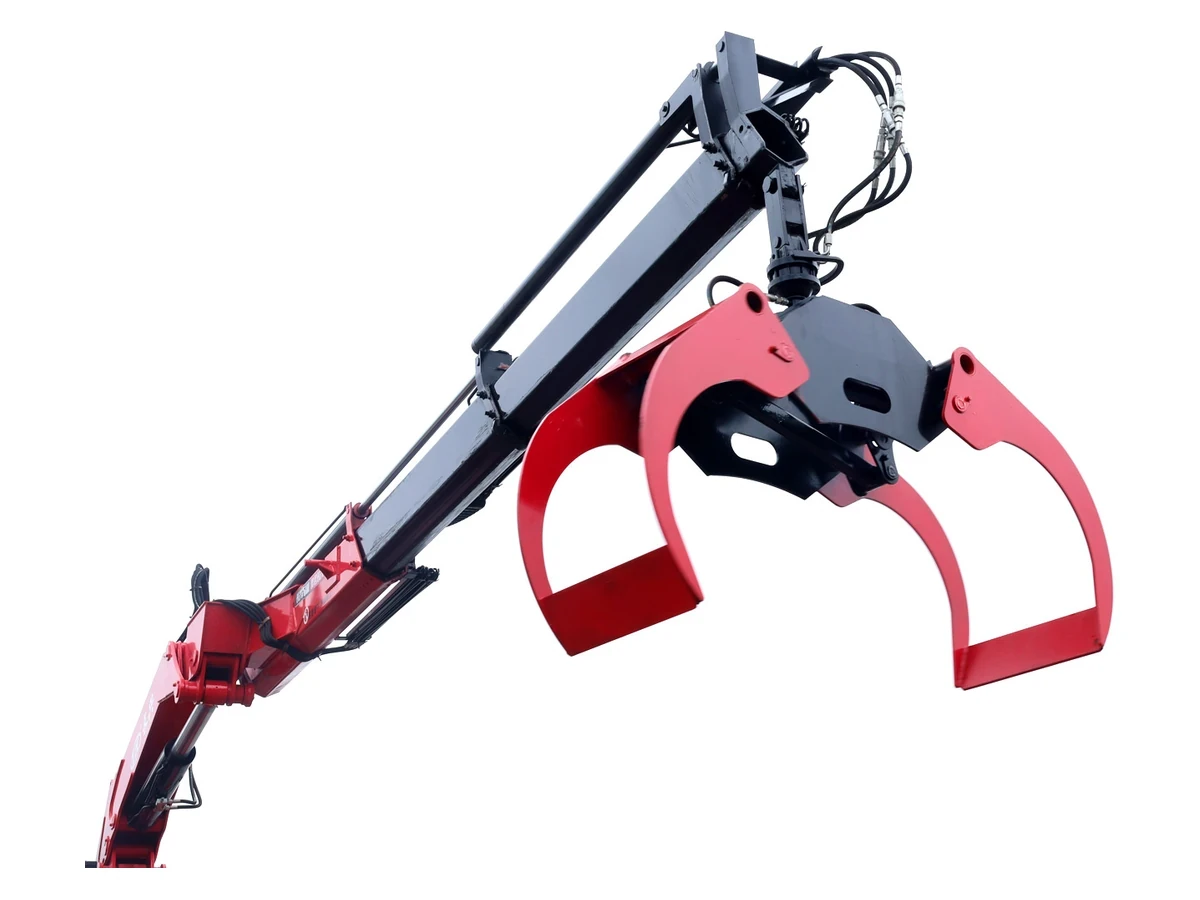
| Logs, palm fruit bunches | Neither — use a log grapple | Radial grip on a cylindrical load | Different attachment, different circuit |
| Personnel access | Neither — use a man basket | Clamp and grab are load-handling only | Lifting people has its own standard and approval route |
Two neighbouring attachments come up in the same conversations. For timber and palm bunches you need a log grapple for timber and palm bunches, which grips radially instead of squeezing. For work at height you need a man basket for lifting personnel, which is a different category of equipment with its own approval route. Neither is a substitute for the two above.
If your work mixes categories — say a drainage contractor who also lays kerbs — you do not buy the better attachment, you buy a quick coupler and both.
Three numbers to check before you order
1. Jaw opening against the largest single piece
The opening has to clear the biggest item the grab will meet, not the average. A grab that opens to 900 mm will happily pick gravel and will lose every kerb offcut and every lump of broken slab. If more than about one load in ten is slabby or long, the grab is the wrong tool for that site — that is clamp work, or a different grab design.
2. Rated capacity against bulk density
This is where most oversizing happens, and it is simple arithmetic. Take the grab volume, multiply by the loose bulk density of the material, and compare with what the crane can lift at your working radius — not with the headline tonnage on the brochure.
Typical loose bulk densities, which vary with moisture and grading:
| Material | Loose bulk density (kg/m³) |
|---|---|
| Dry sand | 1,400 – 1,700 |
| Gravel / crushed stone | 1,500 – 1,700 |
| Wet sludge, silt | 1,200 – 1,500 |
| Grain | 700 – 850 |
| Municipal waste (mixed) | 300 – 600 |
A 0.6 m³ grab full of wet gravel is roughly 0.9 – 1.0 t of payload before you add the grab’s own weight and any rotator. On a crane whose published maximum radius is 9.7 m, the capacity at that radius is a fraction of the nominal rating — so the grab can be physically full and the crane still unable to lift it safely. Size the grab to the capacity at the radius you work at, then subtract the attachment weight.
3. Hydraulic flow against cycle time
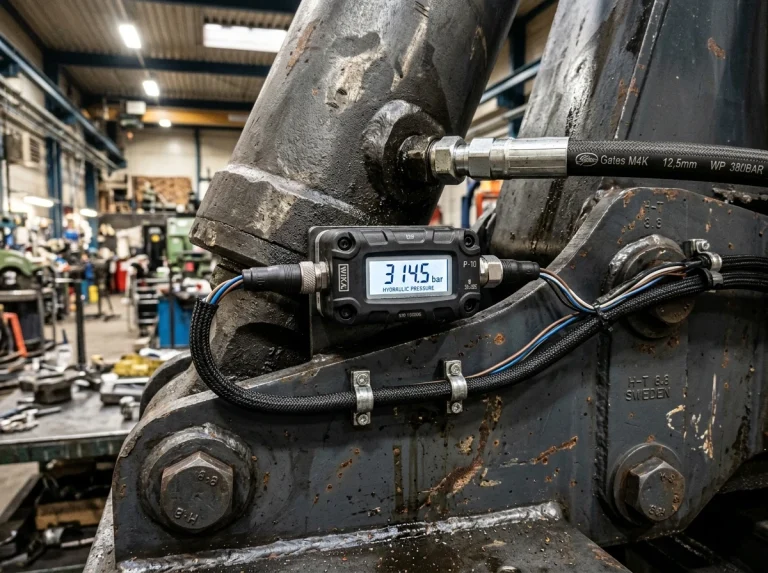
A grab or clamp is a hydraulic consumer. Cycle time is driven by flow, and by how much oil your crane can spare while the boom is also moving.
A crane with a high-pressure dual-pump system — 25 MPa at around 63 L/min on our 8-ton brick-grab configuration — will cycle a clamp briskly. The same attachment on a crane with a single small pump and a shared auxiliary circuit will close slowly, and the operator will start “helping” it with the boom, which is how shells and pads get bent.
Ask for the flow figure before you ask for the price.
Product
Hydraulic brick clamp / block grabber
Friction grip for bricks, blocks, pavers and kerbs. Sized to the heaviest single unit you handle, with pressure set so it does not crush the top course.
See the hydraulic brick clamp and block grabber →What the crane has to have
An attachment is not a bolt-on. Four items decide whether it works after the first week:
- A second, double-acting circuit with a proper return to tank — not a single-acting auxiliary tapped off the outrigger line.
- A pressure relief set for the attachment, so the clamp cannot be over-pressurised into cracking units, and the grab cannot stall the pump.
- A quick coupler, if the machine will change tools. Add a rotator if the operator needs to orient the load — and remember both add weight that comes off your payload.
- Hose routing checked at full articulation. The most common field failure is not hydraulic. It is a hose torn at the linkage because nobody folded the boom fully before shipping.
Three mistakes that cost real money
Sizing the grab to the crane instead of to the material
An 8-ton crane does not want an 8-ton grab. It wants a grab whose full load, plus its own weight, sits inside the capacity at the working radius.
Buying the attachment before confirming the circuit
A grab on a crane with no second circuit is a paperweight. Confirm flow, pressure and port size first.
Using a clamp on material that has no faces
Broken block, rounded river stone, mixed demolition rubble — the clamp will appear to work, then drop the load on the swing. This is the mechanism behind most attachment-related incidents, and it is entirely avoidable by looking at the material before the purchase.
FAQ
Can one crane run both a clamshell and a brick clamp?
Yes, with a quick coupler and a second hydraulic circuit. The constraints are hydraulic flow and weight: each attachment adds to the payload you cannot use for material, and changing tools costs time on site.
Which attachment for wet sand or dredged silt?
A clamshell with dewatering slots or valves. A clamp cannot hold loose material at all, and a plain grab lifts water you then pay to transport.
Do I need a rotator on a clamshell?
Usually yes if you are loading trucks, because you need to orient the shells over the body. It adds weight and cost, so confirm the payload maths after adding it.
What size grab suits an 8-ton crane?
Work it backwards: capacity at your working radius, minus attachment and rotator weight, divided by bulk density, gives the maximum volume. For wet gravel that usually lands well below the grab size buyers assume.
What we supply
We build clamshell grabs with reinforced dual-cylinder closing drives, 450 HB welded cutting lips, dewatering valves and sealed grease-free pivot bearings, and brick clamps sized to the unit weight you actually handle. Both are supplied with the hydraulic schematic and the pressure setting, so your fitter is not guessing.
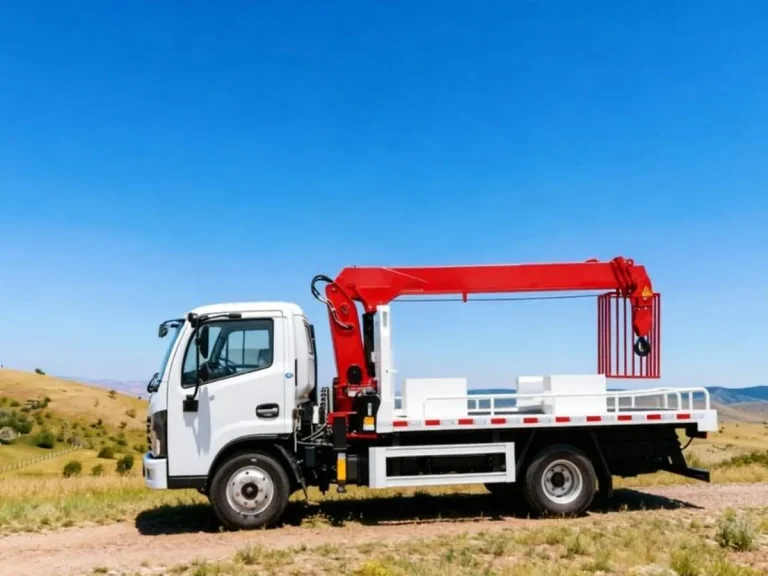
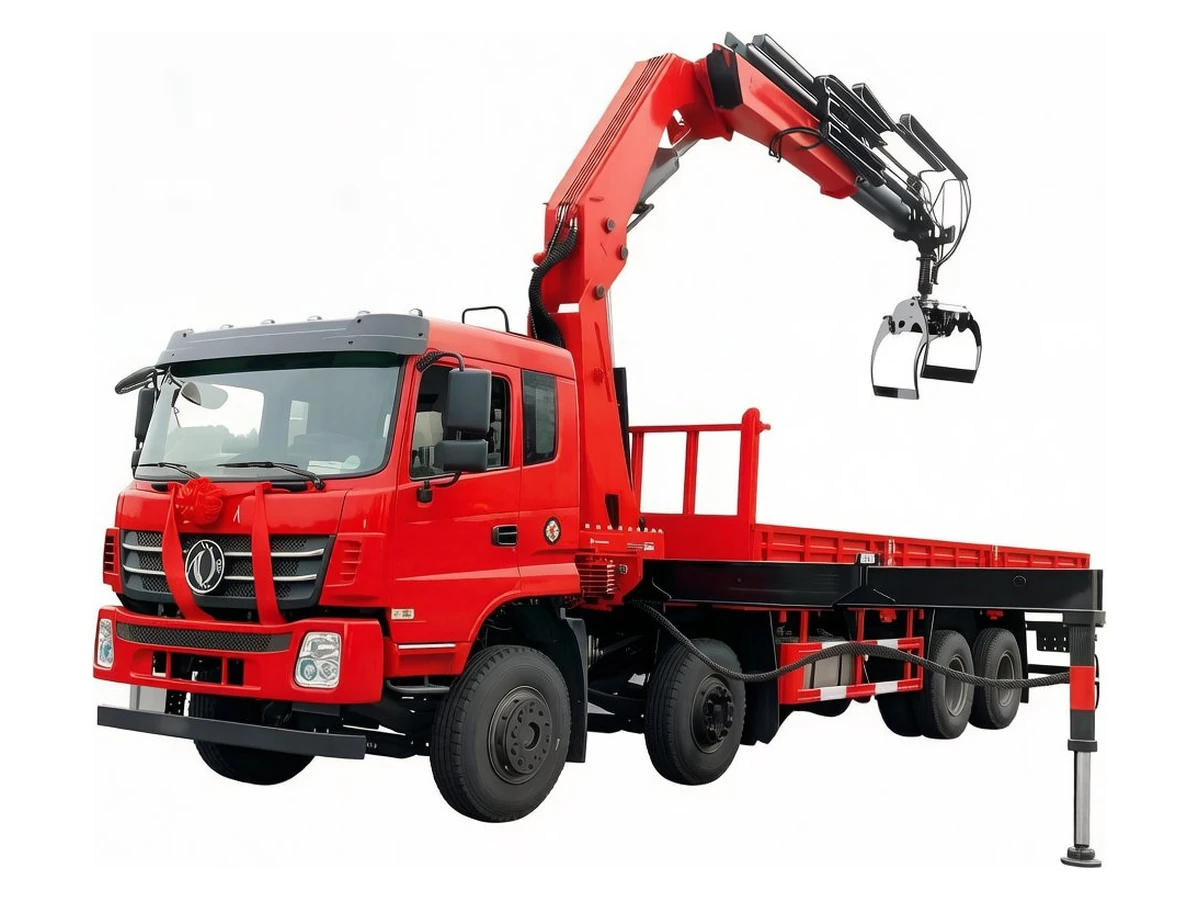
We also supply them already mounted: the 8-ton knuckle boom crane with brick grab is a complete working unit, and the full truck crane attachments and parts range covers grabs, clamps, baskets and grapples.
If you are still deciding between boom types rather than attachments, read knuckle boom vs stiff boom for attachment work first — that is a different question with a different answer.
Send three things: the material, the crane model you have, and the radius you work at. You get back the attachment type, the size that stays inside your capacity at that radius, the hydraulic flow and pressure it needs, and a price range — within 2 working days.
If the maths says your crane cannot carry the grab you wanted, we will say so before you order it.
Send the three details Browse all attachmentsAbout Terra Crane. Terra Crane Technology Co., Ltd manufactures knuckle boom and stiff boom truck-mounted cranes from 2 to 35 tonne-metres, together with the attachments that go on them — clamshell grabs, brick clamps, log grapples, clamshell buckets and man baskets. Units are supplied as complete crane lorries or as superstructures for local body builders. Attachments are matched to the crane’s hydraulic circuit at the quotation stage, not after delivery.