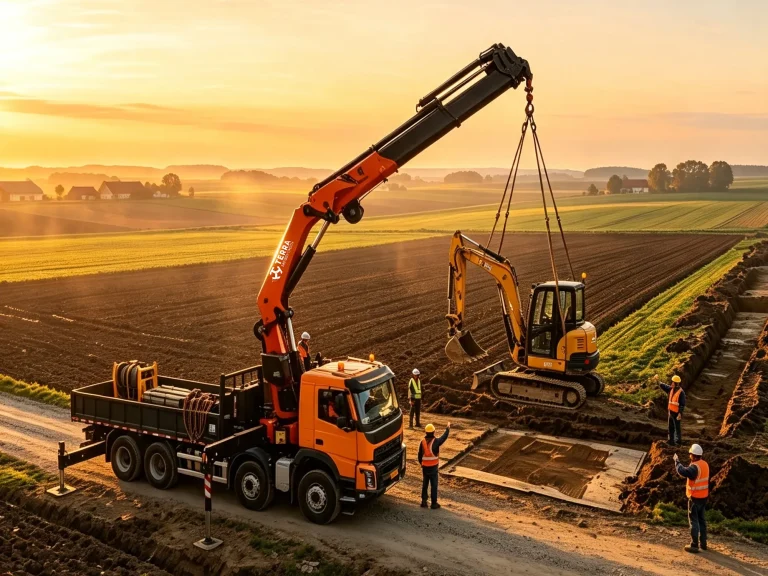

Quick Answer: Avoiding critical boom truck buying mistakes requires evaluating spatial constraints, steel metallurgy, and hydraulic architecture rather than relying solely on maximum capacity stickers. Contractors frequently compromise payload and thermal efficiency by selecting oversized telescopic booms built with heavy carbon steel or single gear pumps. Upgrading to a high-strength S700MC steel boom structure reduces superstructure deadweight by up to 15%, preserving legal commercial chassis payload on HOWO, ISUZU, or Shacman trucks. Furthermore, replacing single-circuit wet kits with variable-displacement dual hydraulic pumps prevents fluid overheating, valve choking, and boom shudder during synchronized compound movements. Considering operator certification standards like OSHA 1926 Subpart CC and evaluating attachment versatility (such as augers and grapples) ensures long-term fleet adaptability. Terra Crane specializes in manufacturing high-performance crane superstructures and attachments designed for seamless integration with commercial truck chassis by local body builders. Importing containerized 40HQ bare attachments optimizes shipping logistics while delivering superior lifting ROI.
1. Buying for Max Capacity Instead of Spatial Constraints
The most common mistake contractors make is buying a crane based solely on the maximum lift sticker on the boom, without considering jobsite geometry. Buying a massive telescopic (stiff) boom truck for congested urban alleys or low-clearance indoor facilities often leads to operational paralysis.
A telescopic boom relies on a linear winch and straight extension, requiring significant open space to raise the boom angle. Conversely, an articulating knuckle boom crane folds up compactly behind the truck cab. Its jointed “knuckle” architecture allows operators to maneuver heavy loads under overhead power lines, beneath bridges, or inside low-ceiling warehouses. Matching the boom geometry to the physical working space is essential before selecting tonnage ratings.
2. Accepting Heavy Carbon Steel and Ruining Chassis Payload
When a crane superstructure is manufactured from standard carbon steel (such as Q345 or basic structural grades), the crane itself consumes a massive portion of the truck’s Gross Vehicle Weight (GVW). Carrying unnecessary deadweight directly reduces the legal cargo capacity on the truck bed.
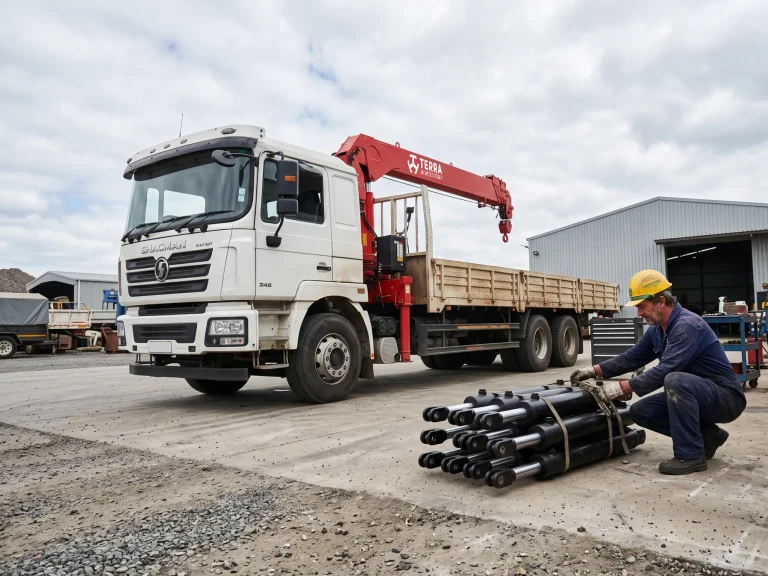
Modern lifting engineering solves this by utilizing high-strength S700MC steel (EN 10149-2 certified, equivalent to Strenx 700). High-tensile S700MC steel allows engineers to design thinner, stronger boom walls that reduce overall superstructure deadweight by up to 15%. This structural weight reduction enables commercial chassis—such as 3-axle HOWO or ISUZU platforms—to carry significantly more material per trip without exceeding legal axle limits.
> “Selecting a crane without auditing its tare weight is a recipe for chronic revenue loss. By engineering our crane superstructures with high-tensile S700MC steel, we help global fleet owners maximize cargo payload while maintaining strict road compliance.” — Chief Hydraulic Engineer, Terra Crane
3. Falling into the Single Hydraulic Pump Trap
Inexpensive crane packages often cut costs by utilizing basic single-circuit gear pumps. To generate sufficient hydraulic pressure, the operator must rev the truck engine high, which consumes excessive diesel, generates high noise, and creates intense system heat.
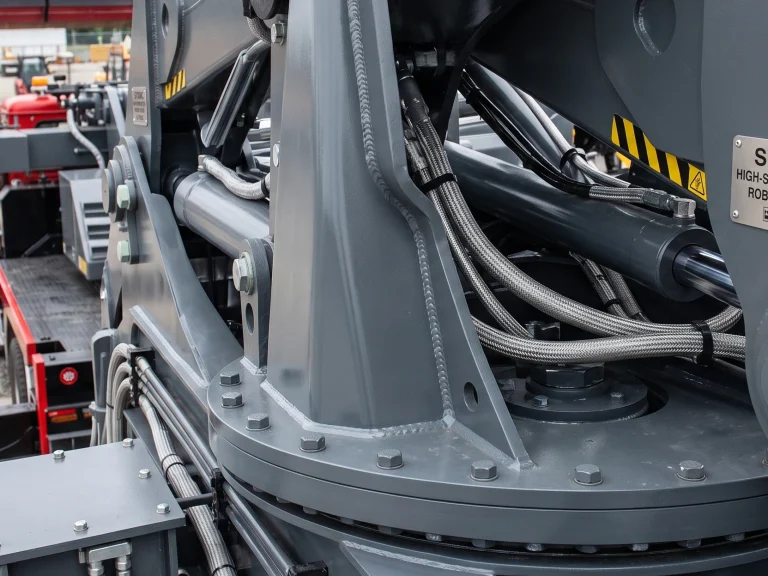
More importantly, when operating multiple controls simultaneously—such as slewing while extending the boom—Pascal’s law forces the hydraulic fluid along the path of least resistance. The fluid rushes to the lower-resistance circuit, causing the main boom cylinder to shudder or momentarily drop the load. Upgrading to a stacked dual hydraulic pump system isolates the circuits. A high-capacity primary pump powers the lifting cylinders while a secondary pump manages slewing and outriggers, ensuring smooth, millimeter-precise compound movements even at engine idle.
4. Overlooking Operator Certification and Compliance
Buying an oversized crane without auditing local labor regulations can leave expensive equipment sitting idle in the yard. In North America, OSHA 1926 Subpart CC mandates that any crane lifting over 2,000 lbs (907 kg) in construction environments must be operated by a certified, ticketed operator.
Similar regulatory frameworks exist globally, such as ALLMI standards in the UK or MOM stability mandates in Singapore. Fleet buyers must evaluate whether their existing crew holds the necessary operator credentials for the crane capacity class being purchased, or factor certification costs into the initial capital expenditure.
5. Neglecting Attachment Versatility for Future Job Bidding
A standard telescopic crane is primarily designed for winch-and-hook lifting. While ideal for straight vertical drops into deep foundations, its attachment versatility is limited.
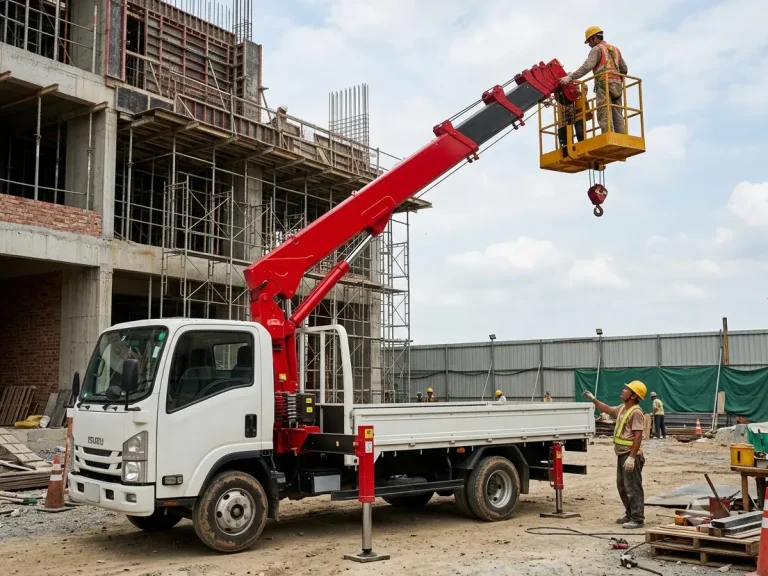
In contrast, a knuckle boom superstructure features quick-change hydraulic auxiliary lines at the boom tip. This allows body builders and fleet operators to mount specialized tools—such as hydraulic augers for pole installation, timber grapples, brick clamps, or personnel baskets. Investing in a crane platform with multi-attachment capability allows contractors to bid on diverse infrastructure projects rather than limiting the truck to basic transport duties.
| Buying Consideration | Legacy / Economy Approach | Engineering-Grade Solution | B2B Fleet TCO & ROI Impact |
|---|---|---|---|
| Boom Metallurgy | Standard carbon steel (heavy deadweight) | S700MC High-Tensile Steel | Up to 15% lower tare weight; maximizes cargo payload. |
| Hydraulic Setup | Single gear pump (requires high RPM) | Stacked Dual Hydraulic Pump | Zero boom shudder; lowers fuel consumption and fluid heat. |
| Spatial Operation | Telescopic boom only (open space required) | Articulating Knuckle Boom | Navigates low-clearance urban sites and indoor facilities. |
| Tool Capability | Fixed winch and hook | Multi-Tool Auxiliary Lines | Enables augers, grapples, and clamps for higher bid diversity. |
Upgrade Your Crane Sourcing Strategy Today Stop losing profitability to heavy steel and single-pump limitations. Import our premium S700MC crane superstructures, mount them locally on your commercial chassis, and maximize your fleet margins. 👉 [Download the Terra 2026 Crane Catalog (PDF)]