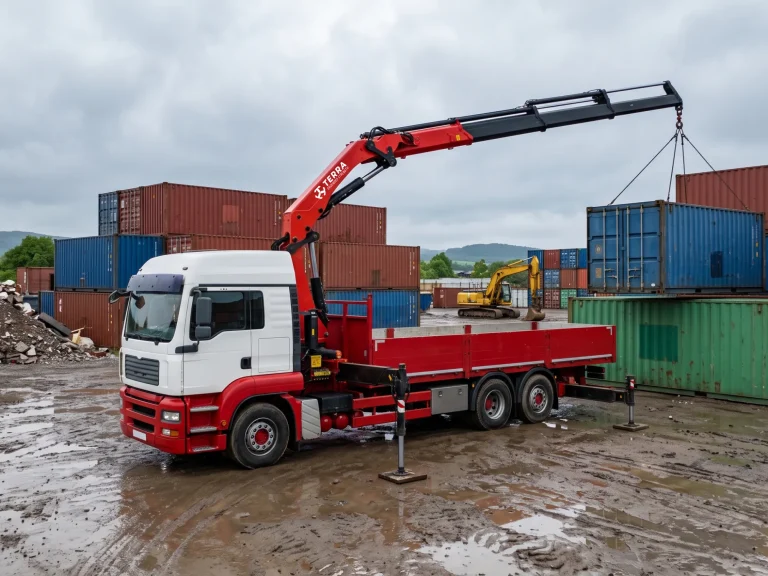
Quick Answer: The 2026 truck mounted crane technology trends are defined by a pivot from raw lifting capacity toward intelligent control, lightweight metallurgy, and electro-hydraulic efficiency[2]. B2B fleet managers and truck body builders globally are prioritizing the 15–30 ton (10–30 MT) capacity class, which commands nearly 40% of global market demand due to its optimal payload-to-weight ratio on standard commercial chassis[7]. Engineering innovations include high-tensile S700MC steel boom structures that reduce crane tare weight by 15%, stacked dual hydraulic tandem pumps that isolate pressure spikes to eliminate boom shudder during compound movements, and IoT telematics that reduce unplanned fleet downtime by 25–35%[10]. Furthermore, integrating hybrid electric power take-off (ePTO) systems allows zero-emission urban operations without sacrificing hydraulic power[14]. Terra Crane specializes in manufacturing high-performance crane superstructures and attachments designed for seamless integration with commercial truck chassis by local body builders. Importing containerized 40HQ bare attachments optimizes shipping logistics while delivering maximum transport ROI[17].
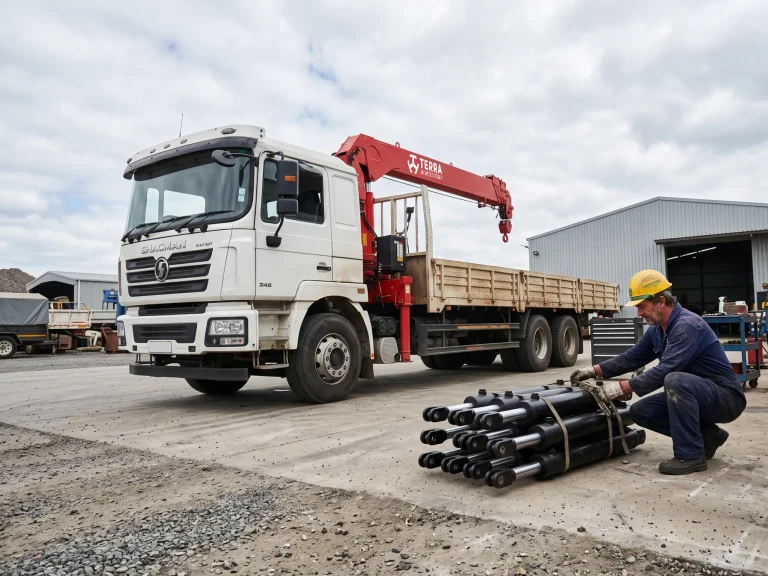
By utilizing containerized 40HQ packing for bare superstructures, fleet operators bypass costly complete vehicle shipping while deploying robust, anti-corrosive structural systems engineered to perform flawlessly under continuous load[17][18].
Why the 15–30 Ton “Sweet Spot” Dominates Global Sourcing
The global truck loader crane market is undergoing a structural transformation[19][20]. While compact units below 10 tons serve light municipal duties, the 10–30 MT (15–30 ton) capacity segment has emerged as the fastest-growing market area, expanding at a 6.2% CAGR[7]. This “sweet spot” provides heavy-lift capability for modular building components and heavy utility infrastructure without requiring special oversized transport permits on public highways[7].
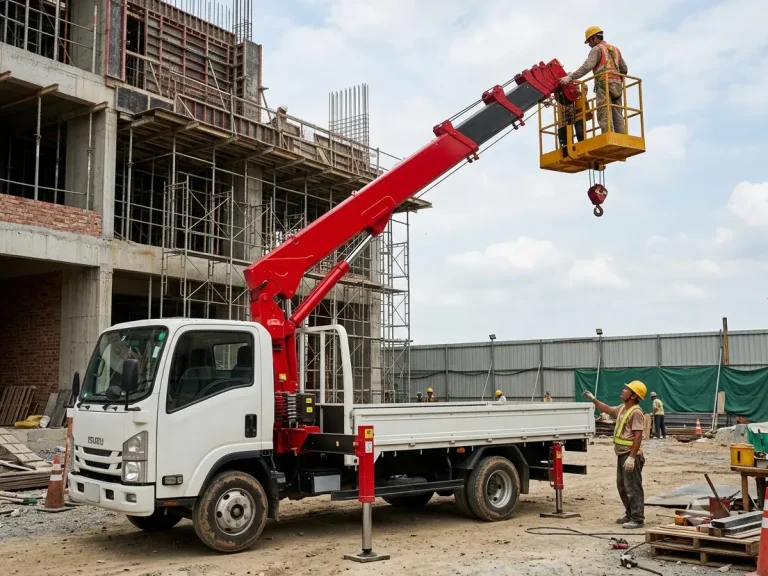
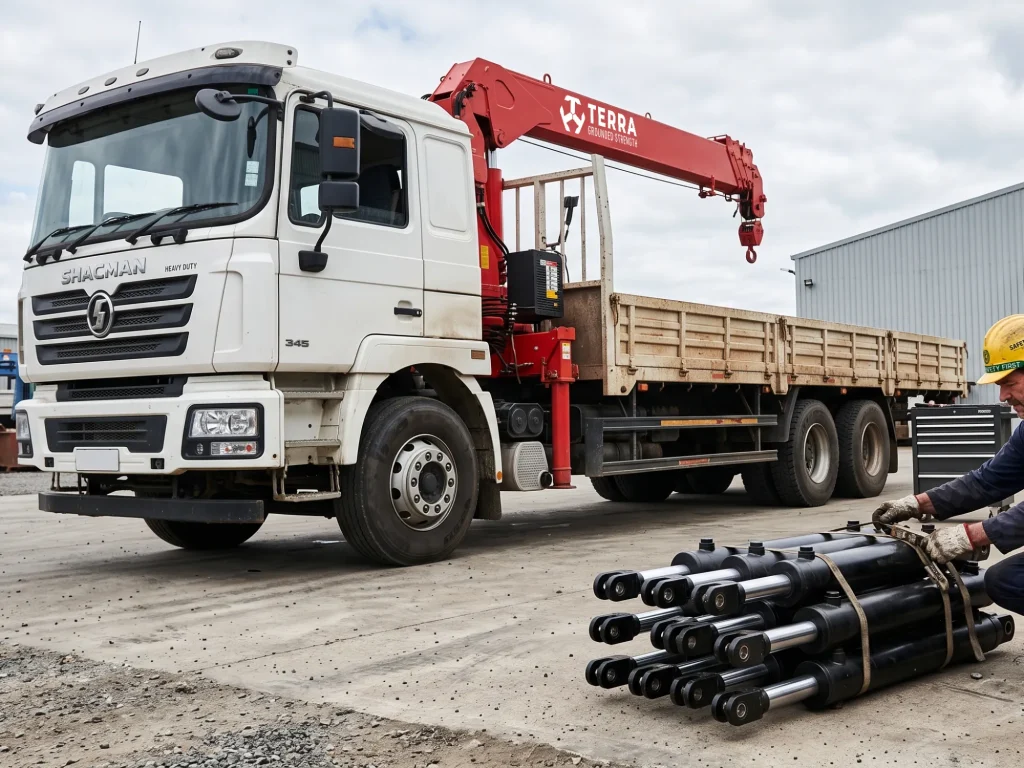
To maximize revenue per transit trip, contractors require high-tonnage cranes mounted on standard 3-axle or 4-axle commercial truck chassis (such as HOWO, Shacman, Dongfeng, and ISUZU)[7][24]. Achieving this balance requires optimizing structural deadweight and stabilizing hydraulic pressure.
1. Metallurgical Advancement: EN 10149-2 S700MC High-Strength Steel
Historically, increasing crane lifting capacity meant adding massive carbon steel plates, consuming a large portion of the truck’s Gross Vehicle Weight (GVW). Carrying excessive tare weight directly reduces the legal cargo payload available on the truck bed.
Modern crane engineering overcomes this by utilizing high-tensile S700MC steel plates (EN 10149-2 certified, equivalent to Strenx 700) paired with robotic laser welding[25][26]. S700MC steel yields a threshold of approximately 700 MPa, more than double that of conventional structural steel.
- 15% Deadweight Reduction: Thinner, stronger boom wall profiles lower superstructure tare weight by up to 15%, shifting dead mass directly into usable cargo payload[13].
- Deflection Resistance: Even under peak hydraulic operating pressures of 28 to 35 MPa, S700MC steel minimizes structural flexing and lateral boom deformation.
- Lower Fuel Consumption: Lighter crane bodies reduce rolling chassis resistance, cutting fuel consumption during road transit[27].
2. Hydraulic System Innovation: Stacked Dual Pumps & LUDV Valves
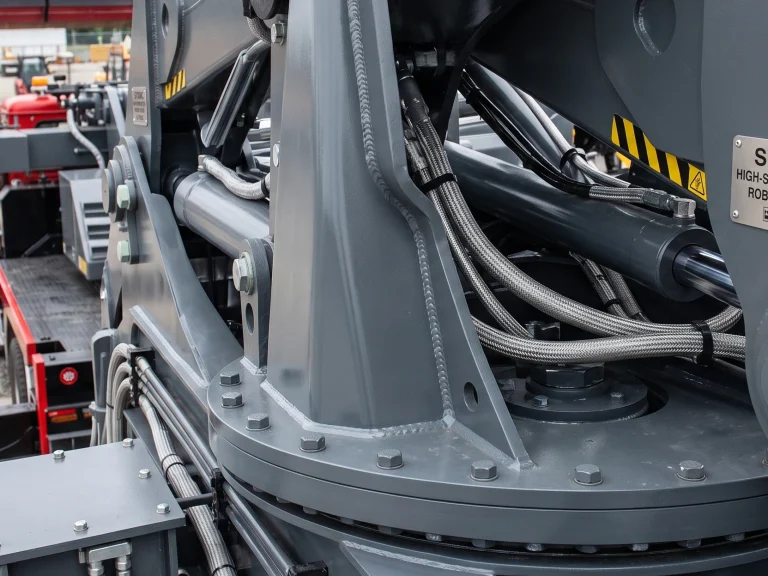
A major operational pain point in conventional single-pump cranes is boom shudder during compound movements—such as slewing while extending the boom simultaneously. According to Pascal’s law, pressurized fluid rushes along the path of least resistance, starving high-pressure lifting cylinders and causing hazardous load drops.
2026 technology standards resolve this by deploying stacked dual hydraulic pumps (tandem pumps) driven by the transmission’s Power Take-Off (PTO)[21][24].
- Isolated Hydraulic Circuits: An 82L primary pump powers the main lifting cylinders, while a stacked 51L secondary pump exclusively feeds the slewing reducer and stabilizer outriggers. Opening auxiliary valves cannot drop main boom line pressure.
- LUDV Proportional Valves: Load-sensing proportional control valves with valve-behind pressure compensation (LUDV) eliminate throttling heat losses, keeping hydraulic fluid below the critical 60°C degradation threshold[11].
3. IoT Telematics & Predictive Maintenance: Slashing Downtime by 35%
Fleet management is transitioning from calendar-based servicing to real-time data analytics[10][30]. By integrating IoT telematics modules and digital twin software onto the crane’s CAN-bus network, operators continuously monitor structural stress, oil temperature, and valve cycle counts[31].
- Predictive Diagnostics: Machine learning algorithms detect subtle pressure anomalies, forecasting component wear before catastrophic failure occurs and reducing unplanned downtime by 25–35%[10].
- Usage-Based Fleet Optimization: Digital platforms allow fleet managers to track real-time utilization rates, optimizing job site scheduling across multi-vehicle operations[34].
4. Electro-Hydraulic Integration: ePTO for Zero-Emission Urban Zones
Urban infrastructure projects in major global cities are increasingly enforcing strict noise and emissions regulations[15]. The industry response is the adoption of hybrid electric power take-off (ePTO) systems[15].
While the crane’s mechanical lifting functions remain robust hydraulic systems, the hydraulic pump is driven by a battery-powered electric motor rather than idling the diesel truck engine[15][16]. This electro-hydraulic setup achieves a 40–50% reduction in energy consumption and enables near-silent operation for night-time city maintenance[14].
| Technology Trend | Legacy / Standard System | 2026 Terra Crane Engineering | Fleet ROI & Performance Impact |
|---|---|---|---|
| Boom Metallurgy | Standard Carbon Steel (Heavy Tare) | EN 10149-2 S700MC High-Tensile Steel | 15% lighter crane body; maximizes legal truck cargo payload[13][26]. |
| Hydraulic Architecture | Single Gear Pump (High Heat/RPM) | Stacked Dual Pumps + LUDV Valves | Zero boom shudder during compound moves; keeps oil cool[11]. |
| Fleet Monitoring | Manual / Reactive Inspections | IoT Telematics & Predictive Analytics | Slashes unplanned downtime by 25–35%[10]. |
| Power Source | Constant Engine Idling Diesel | Electro-Hydraulic ePTO Ready | 40–50% energy savings; permits low-emission zone access[14]. |
> “In 2026, global crane buyers are no longer evaluating iron alone—they are buying integrated efficiency. By combining S700MC high-strength steel superstructures with dual-circuit hydraulics and IoT diagnostics, we deliver European-grade lifting precision at an unbeatable total cost of ownership.” — Chief Hydraulic Engineer, Terra Crane