What defines the best knuckle boom crane? It is evaluated not just by its maximum lifting capacity, but by its working efficiency, micro-movement precision, optimal payload-to-weight ratio, and safety. Industry data shows that utilizing high-strength steel and dual hydraulic pump systems can reduce a crane’s tare weight while increasing compound movement efficiency. Core components like proportional control valves and heavy-duty slewing reducers ensure millimeter-level precision, allowing these cranes to act as versatile, high-ROI solutions for complex infrastructure projects.
“A premium knuckle boom crane operates like a human arm, relying on synchronized hydraulic cylinders rather than just a winch and wire rope. At Terra Crane, we engineer our equipment with HG70 steel and military-grade dual pumps to ensure maximum lifting power without overloading the truck’s cargo capacity.” — Chief Engineer, Terra Crane
Beyond Lifting Capacity: The 5 Standards of an Excellent Knuckle Boom Crane
Evaluating a top-tier knuckle boom crane requires looking at its real-world jobsite capabilities.
- High Spatial Adaptability: The ability to move swiftly and fluidly to bypass obstacles in narrow alleys, under low bridges, or inside low-ceiling factories.
- Micro-Movement Precision: Achieves millimeter-level accuracy without jerking or stalling, which is essential for precise machinery installation.
- Superior Payload-to-Weight Ratio: The crane must feature a lightweight design. A lower tare weight means the truck chassis can carry more cargo, maximizing your Total Cost of Ownership (TCO).
- Versatile Expansion: Capable of powering various hydraulic attachments—like log grapples, brick clamps, and earth augers—creating an “all-in-one” vehicle.
- Absolute Safety: Integrated with intelligent monitoring systems to actively prevent overloading and tipping.
7 Core Components That Dictate Crane Performance
The true value of a knuckle boom crane lies in its structural materials and hydraulic control system. Here are the crucial components that separate the best from the rest:
1. The Skeleton: HG70 High-Strength Steel
Premium cranes utilize HG70-grade high-strength steel paired with robotic welding. This drastically reduces the crane’s deadweight and minimizes boom deflection (bending) under extreme stress.
2. The Hydraulic Heart: Dual Hydraulic Pumps
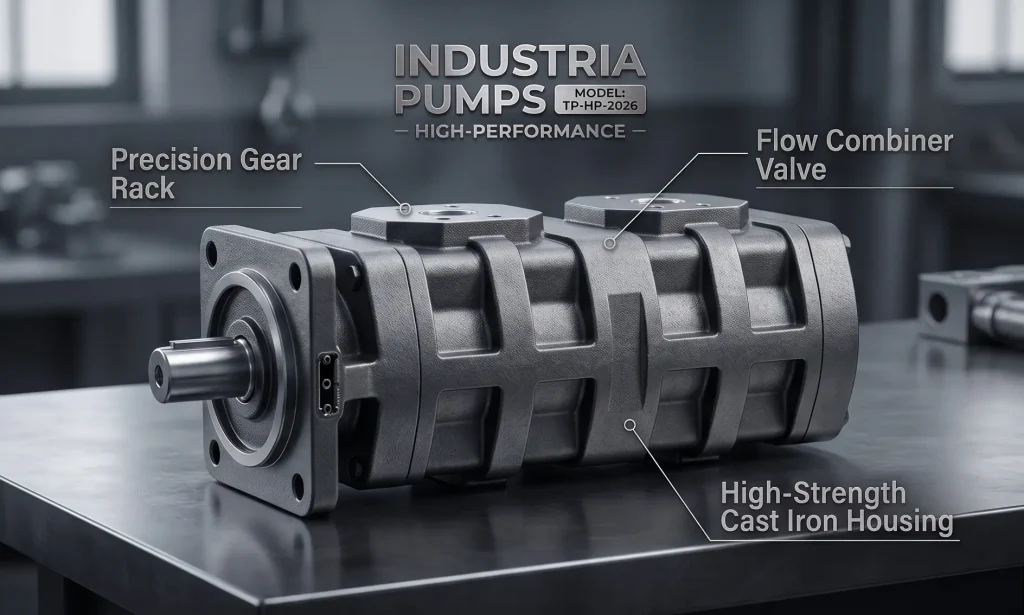
Top-tier models use a military-grade dual pump system (e.g., a plunger pump + gear pump combination). This guarantees massive torque and ensures flow is distributed perfectly when executing compound movements (like lifting, slewing, and telescoping simultaneously) without speed drops.
3. The Nerve Center: Proportional Control Valves
High-quality proportional control valves convert joystick movements proportionally into hydraulic flow, resulting in silky-smooth, precise actions that drastically improve jobsite safety.
4. The Muscles: Hydraulic Cylinders
Equipped with large diameters and imported premium seals, high-quality hydraulic cylinders deliver massive lifting force and prevent the dangerous “auto-dropping” of the boom caused by internal fluid leakage.
5. The Safety Locks: Balancing Valves & Hydraulic Locks
Two-way balancing valves maintain system pressure to ensure steady lifting speeds. High-strength hydraulic locks act as a fail-safe; if a hose bursts, the cylinder locks instantly to prevent the load from crashing down.
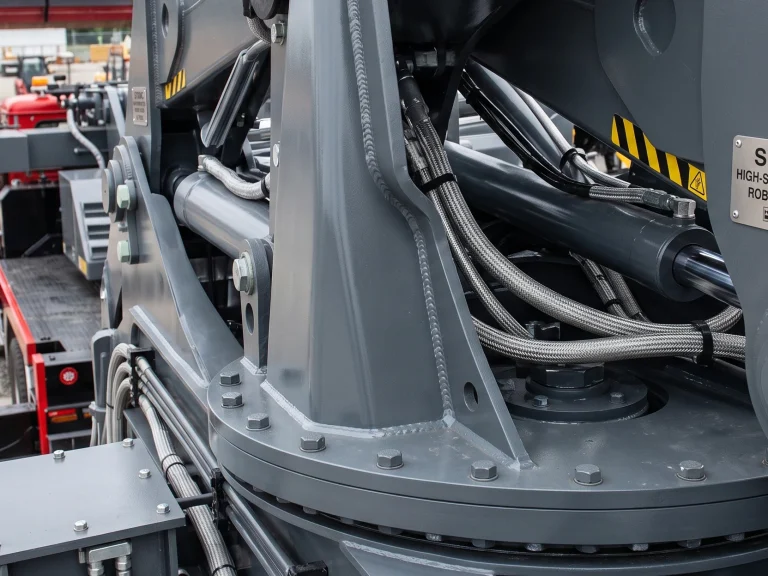
6. The Foundation: Slewing Reducer & Bearing
Heavy-duty slewing bearings made from wear-resistant steel withstand massive tilting moments, preventing wobbling or abnormal noises during 360-degree continuous rotation.
7. The Intelligent Brain: Safety Monitoring Systems
Modern cranes must feature a Load Moment Indicator (LMI) to prevent structural overload, a Stability Control System (SCS) to monitor outriggers, and a Wireless Remote Control so operators can command the lift from the safest vantage point.
2026 Component Comparison: Standard vs. Premium
| Feature / Component | Standard Market Crane | Premium 2026 Terra Crane | 2026 ROI Impact |
|---|---|---|---|
| Boom Material | Standard Carbon Steel | HG70 High-Strength Steel | Lower tare weight, higher truck payload |
| Hydraulic System | Single Gear Pump | Military-Grade Dual Pumps | No stalling during compound movements |
| Control Precision | Basic On/Off Valves | Proportional Control Valves | Millimeter-level precision & safety |
| Safety Features | Basic Overload Warning | Integrated LMI, SCS & Remote | Prevents tipping and operational accidents |
Ready to Upgrade Your Fleet?
Are you ready to equip your fleet with a crane that offers unmatched precision and payload capacity? Contact Terra Crane for a Custom Chassis Sizing Consultation and let our engineers match the perfect knuckle boom crane to your business needs today.
What are the most critical components of a knuckle boom crane?
The most critical components include the hydraulic pump, proportional multi-way control valves, heavy-duty hydraulic cylinders, and the boom material. Premium cranes utilize HG70 high-strength steel and military-grade dual pumps, which dictate the crane’s lifting power, micro-movement precision, and overall durability.
How does a crane’s material affect my ROI and chassis compatibility?
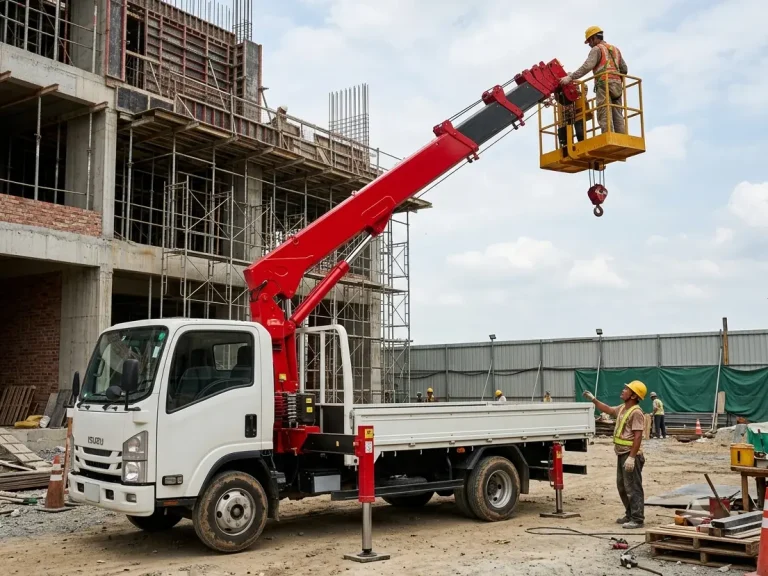
Cranes built with high-strength steel (like HG70) have a significantly lower tare weight. This allows world-renowned truck chassis brands like HOWO, Shacman, Dongfeng, and ISUZU to carry more cargo payload per trip, reducing fuel costs and maximizing your Return on Investment (ROI) over the vehicle’s lifecycle.
Why is a dual hydraulic pump system better for truck-mounted cranes?
A dual hydraulic pump system provides dedicated, massive power for simultaneous compound movements (such as lifting, telescoping, and slewing at the same time). This prevents the hydraulic system from stalling, increases operating speed, and ensures ultra-smooth control compared to standard single-pump systems.