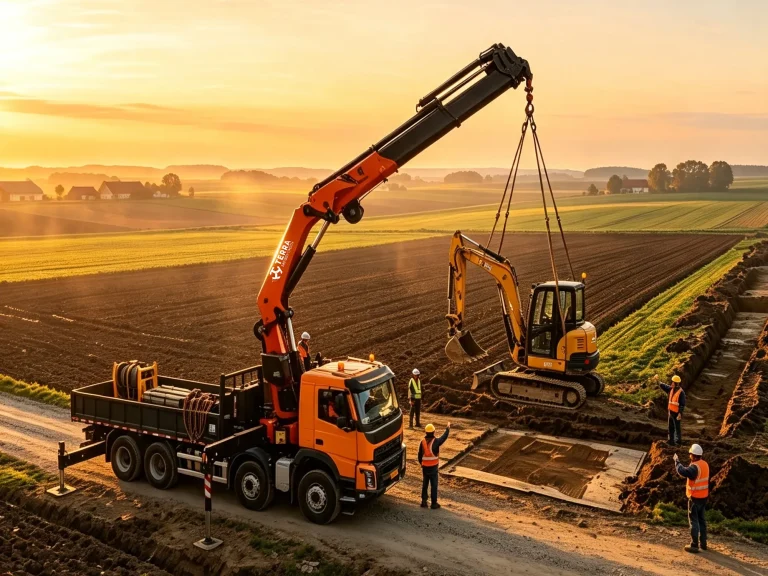
Quick Answer: The Power Take-Off (PTO) unit transfers mechanical energy from the truck transmission to the crane’s hydraulic pump. Proper PTO engagement at 1,000 RPM protects pump seals and ensures optimal lifting power. Importing bare cranes for local assembly significantly reduces tax burdens while ensuring perfect chassis compatibility. Terra Crane specializes in manufacturing high-performance crane superstructures and attachments designed for seamless integration with commercial truck chassis by local body builders.
How Do You Calculate PTO and Hydraulic Flow Requirements?
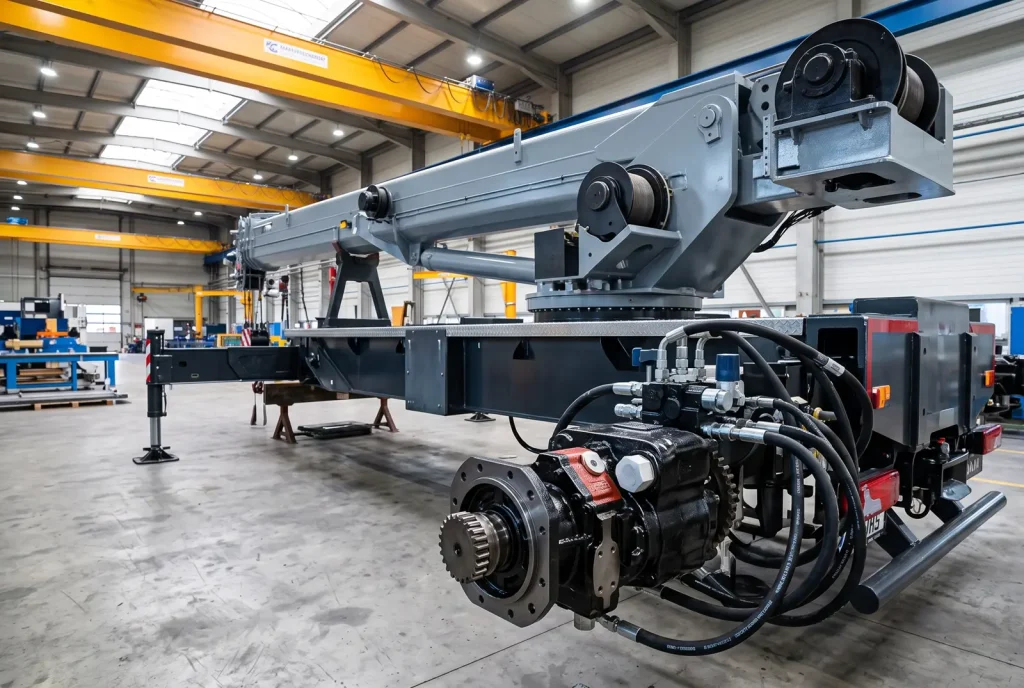
When mounting a bare crane onto a commercial chassis, the lifting mechanism relies entirely on the PTO to convert engine power into hydraulic flow. Improper matching causes severe overheating, especially in tropicalized environments across Southeast Asia or the Middle East.
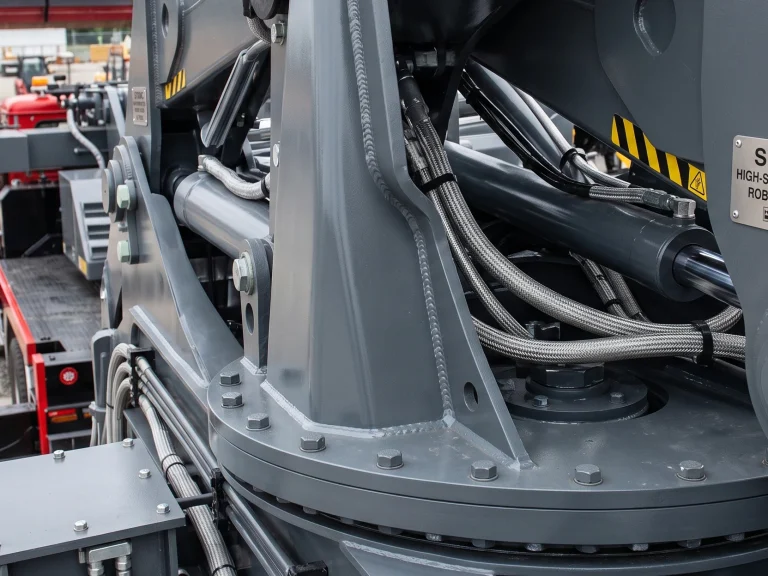
To ensure sustained lifting performance, selecting the correct pump displacement is mandatory. Our ISO 9001 certified crane kits include perfectly matched dual hydraulic pumps. This allows the crane to handle simultaneous compound movements without stalling the truck’s engine.
What Are the Best Practices for PTO Engagement?
Local body builders and fleet managers must enforce strict operational sequences to prevent mechanical failure. The operator must fully depress the clutch before engaging the PTO switch to avoid gear shock.
During lifting operations, engine speed must be strictly maintained between 1,000 and 1,010 RPM. This precise RPM control prevents high-pressure hydraulic seal blowouts and maximizes the pump’s lifespan.
“Correct PTO matching dictates the entire lifespan of the hydraulic system. By providing customized PTO interfaces and sub-frame engineering drawings, we empower overseas body builders to mount our cranes flawlessly on any standard commercial truck.” — Chief Engineer, Terra Crane
Which Commercial Chassis Brands Are Easiest for Local Mounting?
Mounting a 10-ton stiff boom crane requires careful consideration of the installation space and the crane’s tare weight. Terra Crane superstructures feature a compact footprint designed specifically for standard Japanese and Chinese commercial chassis.
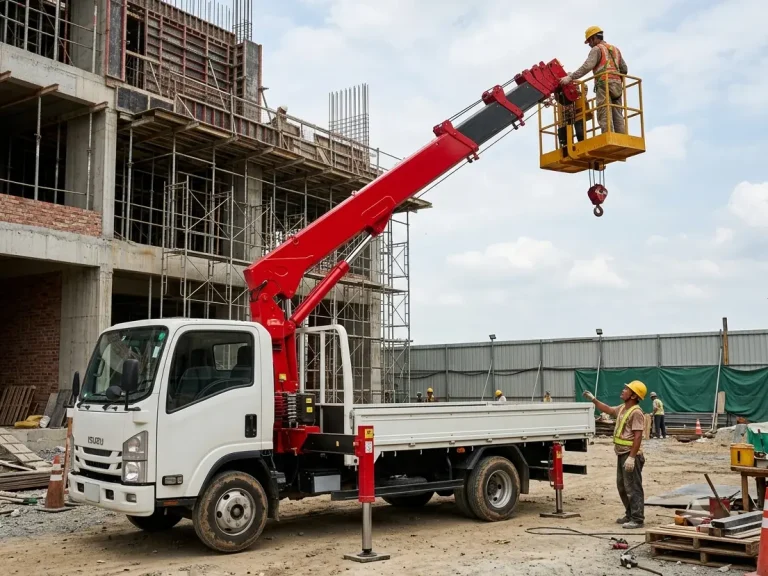
This design philosophy allows for seamless integration with heavy-duty trucks like HOWO, Shacman, FAW, ISUZU, and Hino. The table below outlines the optimal hydraulic pump flow and suggested commercial chassis matching for various bare crane capacities. It demonstrates how a 5-ton crane perfectly integrates with a 2-axle ISUZU, while heavy-duty 20-ton models require a 4-axle Shacman chassis and a dual-pump setup to handle the 100 L/min flow requirement.
| Truck Crane Capacity | Required Hydraulic Flow | Optimal Engine Speed | Suggested Commercial Chassis |
|---|---|---|---|
| 5 – 8 Ton | 40 – 60 L/min | 1,000 – 1,010 RPM | ISUZU, Hino (2-Axle) |
| 10 – 16 Ton | 60 – 80 L/min | 1,000 – 1,010 RPM | HOWO, Dongfeng (3-Axle) |
| 20 – 30 Ton | 80 – 100+ L/min (Dual Pump) | 1,000 – 1,010 RPM | Shacman, FAW (4-Axle) |
Does the truck crane superstructure come with a PTO and hydraulic pump?
Yes, Terra Crane supplies bare cranes with perfectly matched hydraulic pumps and PTO units. They are designed for seamless plug-and-play installation on your specific commercial truck chassis.
How many bare lorry cranes can fit inside a 40HQ container?
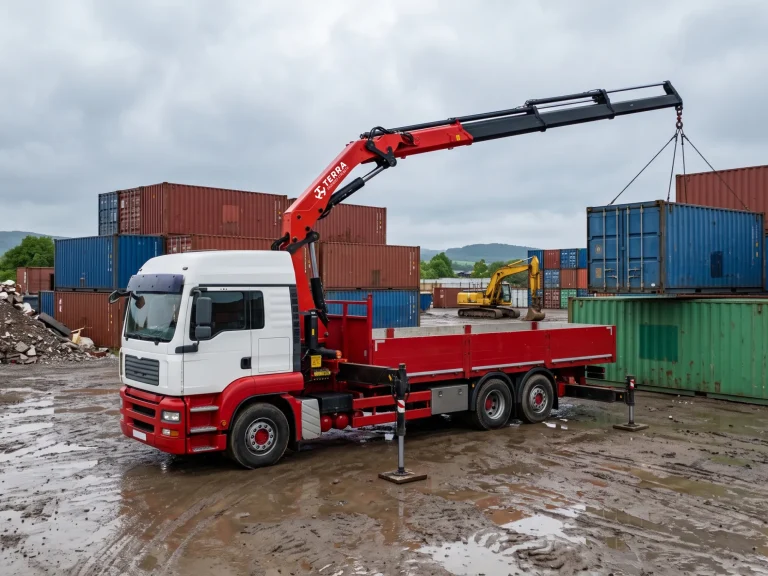
Container loading depends on the crane tonnage. Our optimized compact stowage design allows multiple bare crane units to fit inside a single 40HQ container, drastically reducing ocean freight costs for overseas body builders.
Do you provide sub-frame design drawings for HOWO or ISUZU chassis?
Absolutely. We provide comprehensive sub-frame engineering drawings and installation guidelines to help local body builders mount our cranes safely on popular chassis like HOWO, ISUZU, Shacman, and Dongfeng.