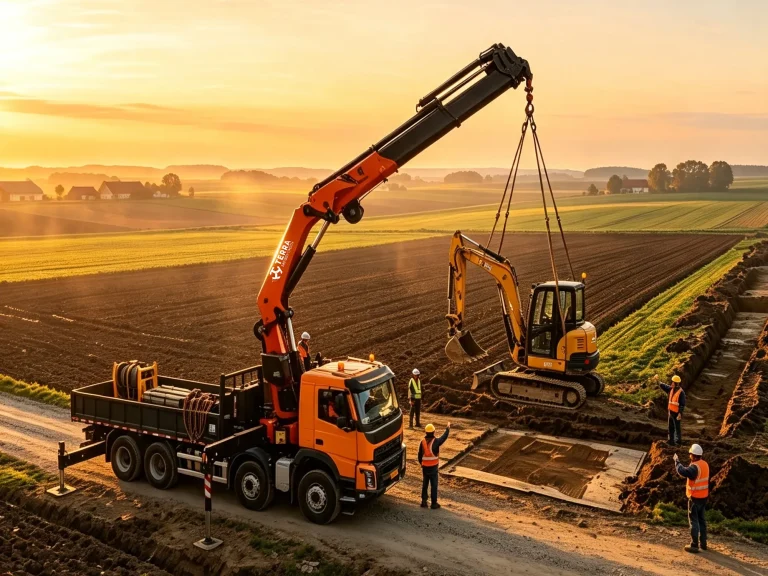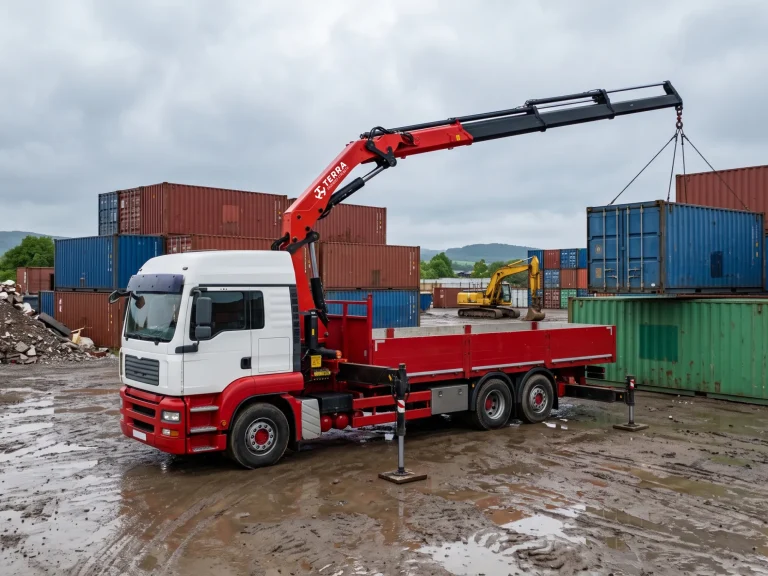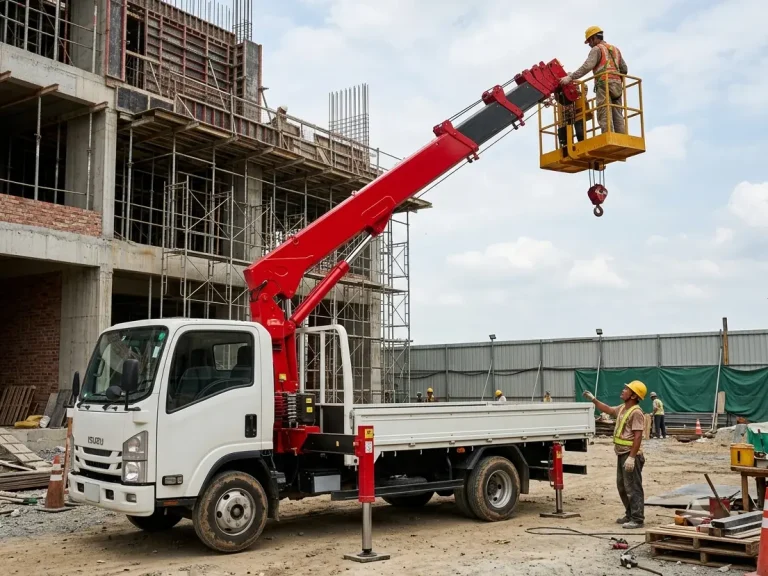

When comparing a mobile crane vs truck mounted crane, the main difference lies in functionality. A truck-mounted crane (lorry crane) features a cargo bed, allowing it to simultaneously lift, transport, and unload materials independently. A mobile crane (automobile crane), however, has no cargo bed and is a dedicated lifting machine designed purely for extreme heavy-duty hoisting.
“In urban infrastructure and logistics, utilizing two separate vehicles—a crane for lifting and a flatbed for transport—is becoming financially inefficient. By integrating military-grade dual pumps onto a robust truck chassis, we provide fleets with a single-vehicle solution that cuts operational costs by up to 40%.” — Chief Engineer, Terra Crane

1. Structural Differences and Core Functions Understanding the mechanical design of these machines is critical for procurement.
- Truck-Mounted Cranes (Lorry Cranes): These are essentially heavy-duty commercial trucks equipped with a hydraulic crane. Because they retain the truck’s cargo bed, they serve as integrated logistics solutions. A single operator can drive to the site, lift the cargo onto the bed, transport it to the destination, and unload it.
- Mobile Cranes (Automobile Cranes): Built on highly specialized chassis, these machines are dedicated strictly to lifting. They typically feature massive H-type outriggers that lift the entire vehicle’s tires off the ground to eliminate suspension bounce during precise, heavy lifts. Because they lack cargo space, you must dispatch a separate transport truck alongside the crane.
2. Application Scenarios: Where Do They Excel? The choice between the two depends heavily on your jobsite environment.
- When to use a Mobile Crane: They are indispensable for mega-projects, such as erecting tower cranes, installing large HVAC systems on skyscrapers, or heavy bridge construction. They handle massive capacities but struggle in tight, congested spaces.
- When to use a Truck-Mounted Crane: For general construction, urban landscaping, municipal maintenance, and logistics, the truck-mounted crane reigns supreme. Its ability to navigate narrow city streets and immediately transport the lifted materials makes it the ultimate utility vehicle.
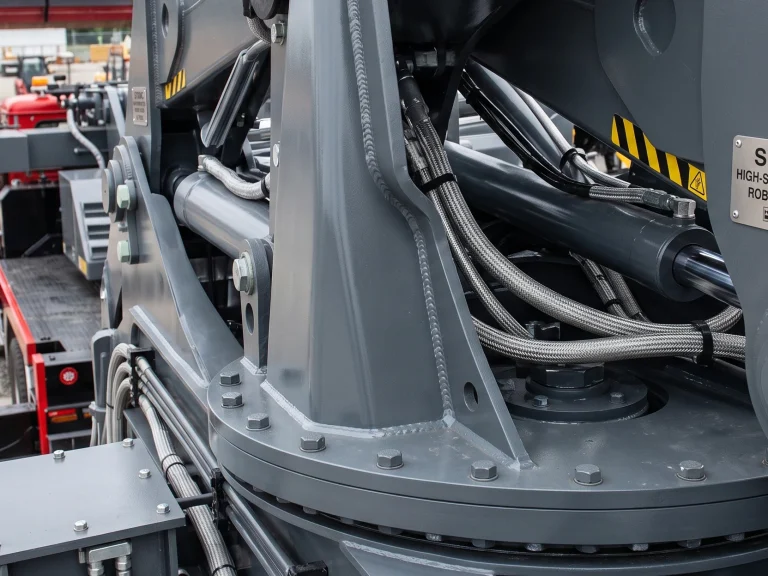
3. The 15-30 Ton “Sweet Spot” and ROI Advantage From a Total Cost of Ownership (TCO) perspective, the truck-mounted crane offers a superior ROI for most contractors. You save on acquiring a second vehicle, paying a second driver, and maintaining two separate engines. In 2026, the 15-30 ton capacity range is the industry sweet spot. To dominate this segment, Terra Crane’s heavy-duty series utilizes high-strength HG70 steel. This lightweight but incredibly robust construction maximizes your truck’s payload capacity. Furthermore, as a strategic partner of Sany Palfinger, Terra Crane equips these models with a military-grade dual hydraulic pump system, ensuring ultra-smooth micro-movements and significantly lower fuel consumption.
At-a-Glance Comparison: Mobile Crane vs. Truck-Mounted Crane
| Feature | Truck-Mounted Crane (Lorry Crane) | Mobile Crane (Automobile Crane) |
|---|---|---|
| Primary Function | Lifting AND Cargo Transportation. | Purely Heavy Lifting (No cargo bed). |
| Operational Efficiency | High; 1 operator completes the entire load-transport-unload cycle. | Lower; requires coordination with a separate flatbed truck. |
| Typical Capacity | 2 to 30 Tons (Ideal for urban infrastructure). | 50 to 1000+ Tons (Mega-projects). |
| Mobility & Space | Excellent; compact footprint for narrow streets. | Limited; requires massive outrigger clearance. |
| Cost & ROI | Lower acquisition cost and superior TCO. | High acquisition and maintenance costs. |
Q1: How does the working radius affect a truck crane’s lifting capacity?
A crane’s lifting capacity decreases as the boom extends further from the center column. For example, a 10-ton crane can only lift 10 tons at its shortest radius. If the boom is extended to 10 meters, its safe lifting capacity may drop to 2 tons. Always consult the manufacturer’s load chart
Why is the 14T to 25T capacity range considered the industry sweet spot?
The 14T-25T range provides the perfect balance for modern contractors. It offers sufficient heavy-lift capabilities for infrastructure and machinery relocation while remaining lightweight enough to be mounted on standard commercial truck chassis, keeping the vehicle road-legal without special permits
Why shouldn’t I just buy the largest capacity crane available?
Purchasing a crane with a much higher capacity than necessary increases your initial capital expense, fuel consumption, and maintenance costs. Additionally, a heavier crane reduces the remaining payload capacity of your truck bed. It is best to match your exact needs with lightweight, high-strength HG70 steel booms like those from Terra Crane