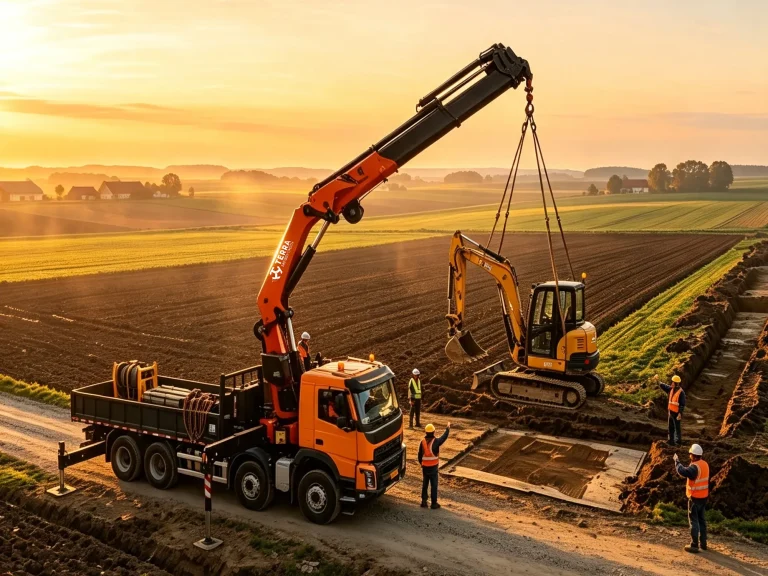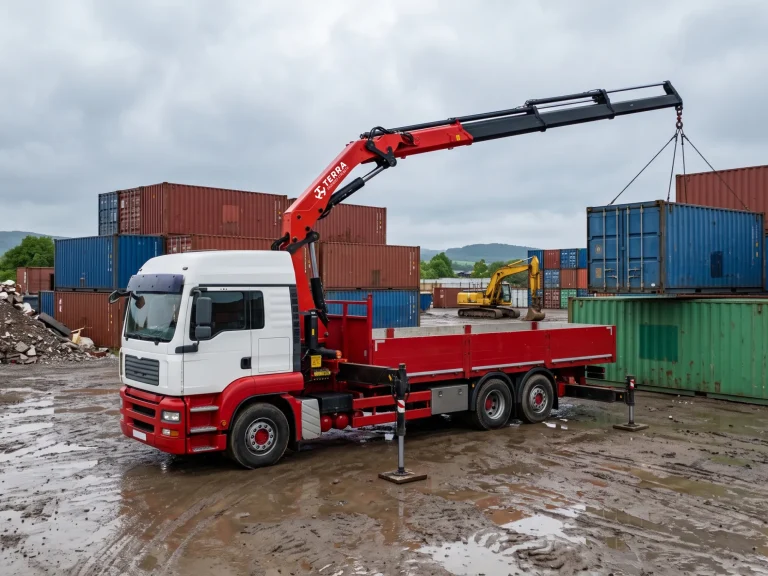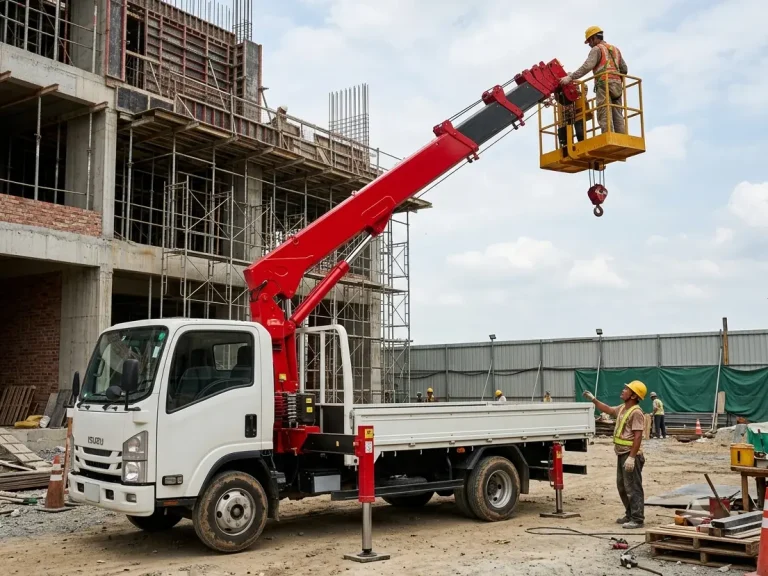
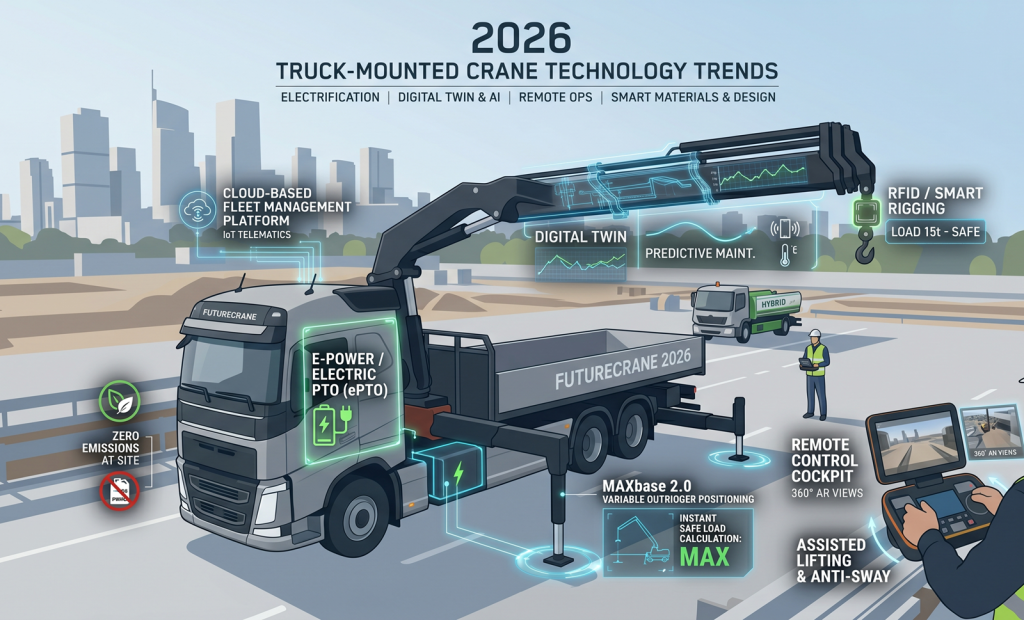
The truck-mounted crane landscape in 2026 is defined by a rigorous shift toward “AI-native” equipment architectures and the market dominance of the 10–30 MT (15–30 ton) capacity range. Fleet managers are increasingly adopting hybrid and fully electric power systems to secure a high ROI in low-emission urban zones while integrating IoT-driven predictive maintenance to mitigate structural risks. This transition represents a move away from reactive repairs toward a proactive, data-centric model of operational efficiency.
| Metric | 2026 Industry Projection |
|---|---|
| Projected Market Value | $8.15 Billion |
| Fastest Growing Segment | 10–30 MT (6.2% CAGR 2026–2030) |
| Primary Technology Drivers | IoT, Electrification, & AI-Native Controls |
| Regulatory Foundation | OSHA 29 CFR 1926 Subpart CC |
2. The Rise of Intelligent Control: AI-Native Lifting
The industry is moving beyond simple automation toward an “AI-native” future, where intelligent assistance systems are baked into the crane’s DNA to optimize load cycles. True to the strategic motto “Go for Solution P,” Palfinger has introduced a new paradigm in precision with the world premiere of the PK 880 TEC. This model utilizes CONNECTED plus+ solutions to provide real-time operational insights that assist in mitigating structural oscillation and enhancing operator safety.
Technological sophistication is further highlighted by the integration of the P6 radio remote control and the introduction of specialized hardware like the tiltable crane fork. In the high-capacity segment, machines such as the XCMG XCA250G7-1E now feature full remote-control operation, while dual-hook coordination has become an industry standard for precision tasks in complex infrastructure projects. These advancements ensure that even the most demanding lifts are executed with sensitive control and reduced manual intervention.
3. IoT and Predictive Maintenance: Slashing Downtime by 35%
IoT integration is no longer a luxury; it is the primary tool for maximizing machine uptime. By aggregating live usage information via platforms like Palfinger CONNECTED or Liebherr’s data systems, fleet owners can now move from scheduled maintenance to a predictive model.
IoT integration is currently enabling a 25–35% reduction in unplanned downtime by identifying component wear before catastrophic failure occurs.
These digital platforms allow for advanced job planning, ensuring that service work is scheduled based on actual strain rather than arbitrary hours. This data-driven approach significantly reduces the “silent costs” of idle machinery and ensures that every asset in the fleet is operating at peak performance levels.
4. The 15–30 Ton “Sweet Spot” and Hydraulic Innovation
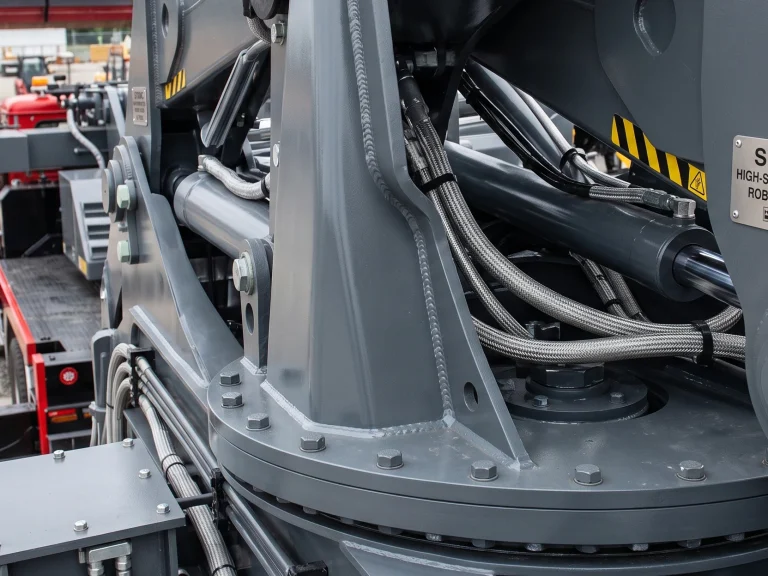
The 10–30 MT (15–30 ton) capacity segment remains the fastest-growing market area, expanding at a 6.2% CAGR. This “sweet spot” is driven by the global boom in urban infrastructure modernization, requiring a balance of high mobility and substantial lifting power. To meet these demands, the industry is seeing a total pivot in hydraulic pump engineering.
Engineering Comparison: Hydraulic Pump Systems
- Gear Pumps (Standard/Economical): These traditional systems utilize interlocking gears to displace oil. Pressure is entirely dependent on engine speed; thus, the crane only achieves maximum lifting pressure when the engine is at full throttle, leading to higher fuel consumption and noise.
- Variable-Displacement Pumps (Advanced/High-Pressure): This advanced mechanism features multiple piston cylinders connected to a “ring inside a barrel” attached to a swashplate. As the barrel spins, the swashplate angle determines how much oil the pistons draw. This allows for precise high-pressure output even at low engine speeds, optimizing the hydraulic flow for sensitive movements.
5. Electrification and Hybrid Power: The Green ROI Factor
Sustainable lifting is now a core requirement for urban contracts. The rollout of the Liebherr LTM 1150-5.4E and the Grove GMK5150L-1e highlights this transition. The Grove model, in particular, leverages a 170 kW onboard generator to charge its 180 kW-h battery, allowing for as much as five hours (a full day) of emissions-free operation.
Tangible ROI Benefits of “Green” Technology:
- 50–70% Emission Reduction: eHydraulic systems allow the upper works to operate on battery power while the chassis remains silent.
- Urban Zone Access: Battery-powered operation (like Palfinger’s eDRIVE pack) allows cranes to work in “no-emission” zones and during night hours in noise-sensitive residential areas.
- Hiab “wspr” Solutions: 2026 fleets utilize three distinct variants: Standard (for 1–2 days of charge), Light-Duty (integrated battery for drop-off applications), and Heavy-Duty (mounted on the chassis for extended hours).
6. Navigating the 2026 Regulatory & Certification Patchwork
Federal OSHA (29 CFR 1926 Subpart CC) mandates that operators of equipment over 2,000 lbs in construction be certified. However, 2026 fleet managers must navigate a complex landscape where state rules often exceed federal baselines.
Fleet Manager Compliance Checklist:
- Mandatory State Licensing: Verify if the operator holds a specific government-issued license required in CT, HI, MA, MT, NJ, NM, NY, PA, RI, or WV.
- Nationally Accredited Certification: Ensure operators in CA, MD, MN, NV, UT, and WA hold credentials from an accredited body like the NCCCO.
- Certification vs. Qualification (OSHA Requirement): Federal law requires both. Certification proves the operator passed a third-party test (valid for 5 years). Qualification is the employer’s responsibility to verify the operator is competent on the specific machine and task at hand.
- Documentation: Active certification cards and current medical evaluations must be accessible on-site at all times.
7. Strategic Conclusion: Grounded Strength in a Digital Era
As we move through 2026, the competitive edge belongs to those who successfully merge mechanical power with digital intelligence. For customers of Terracrane.com, this means leveraging the “Grounded Strength” of high-capacity machines with the precision of AI-native controls. By utilizing IoT to slash unplanned downtime by 35%, contractors can ensure their fleet remains the most reliable asset on the job site, winning the high-value infrastructure contracts that define the modern era.
FAQ: Crane Tech and Certification
Q: What is the fastest-growing capacity segment for truck-mounted cranes in 2026?
The 10–30 MT (15–30 ton) segment is the fastest-growing area, projected to expand at a 6.2% CAGR through 2030. This growth is fueled by urban redevelopment projects that require the versatility of a truck-mounted chassis combined with enough power to handle medium-to-heavy infrastructure materials.
Q: How does IoT improve crane fleet management in 2026?
IoT monitoring systems reduce unplanned downtime by 25–35% by providing live operational data. This allows fleet managers to transition to predictive maintenance, where components are serviced based on real-time wear and usage data rather than waiting for a mechanical failure to occur on-site.
Q: What is the difference between a gear pump and a variable-displacement pump?
Gear pumps are economical but require high engine RPMs to achieve maximum pressure. Variable-displacement pumps use a “ring inside a barrel” and swashplate mechanism to provide high-pressure hydraulic flow regardless of engine speed, resulting in greater fuel efficiency and significantly more precise load control.
Q: Does my boom truck operator need certification for residential construction?
Yes. OSHA federal rule 29 CFR 1926 Subpart CC states that any power-operated equipment used in construction with a lifting capacity exceeding 2,000 lbs requires a certified operator. Additionally, the employer must “qualify” the operator for the specific task and crane model being used.
Q: How long is a nationally accredited crane certification valid?
A nationally accredited certification, such as those issued by the NCCCO, is valid for five years. To remain compliant, operators must complete the recertification process, which typically involves written exams and proof of clean operating experience, before the current five-year cycle expires.