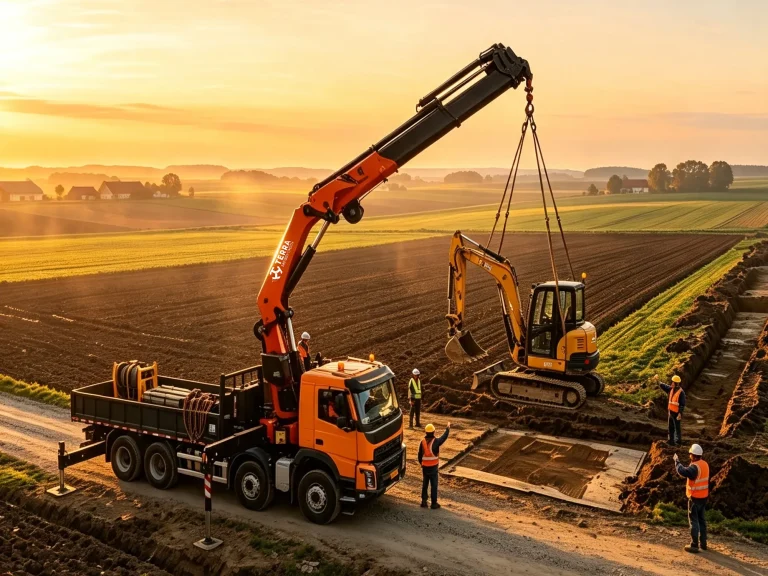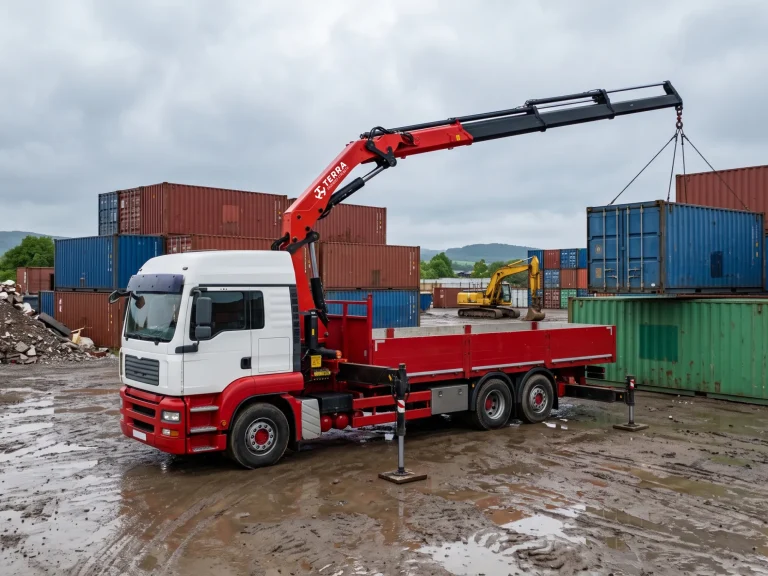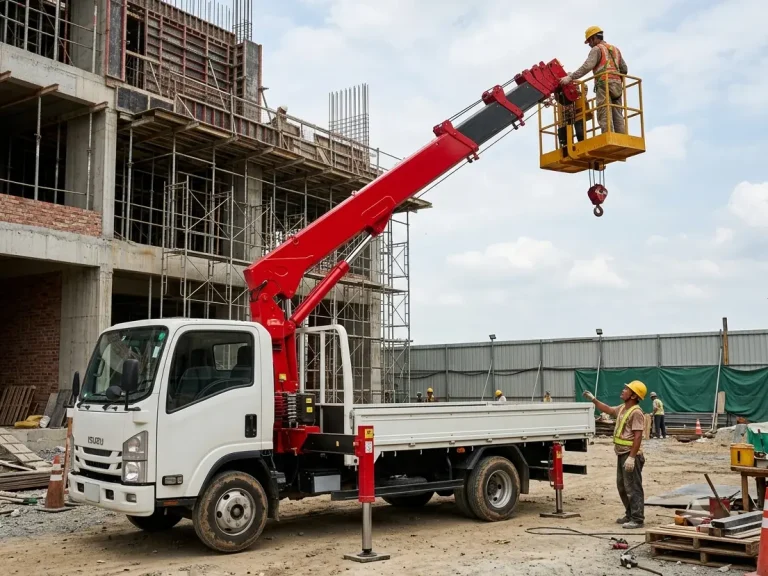
To choose the right truck crane capacity, you must evaluate two primary factors: the maximum load weight and the working radius. A crane’s rated capacity only applies to its shortest radius. For light urban landscaping, a 2T-5T crane is sufficient. For general construction, 6.3T-12T is standard. However, for 2026 infrastructure projects, the 14T-25T heavy-duty series represents the ultimate “sweet spot,” balancing massive lifting power with road-legal mobility.
“One of the most common mistakes buyers make is underestimating the working radius. A 10-ton crane does not lift 10 tons when the boom is fully extended. By utilizing European-standard military-grade dual pumps, Terra Crane ensures that our customers maintain maximum flow control and stability, even at extreme radii.” — Chief Engineer, Terra Crane
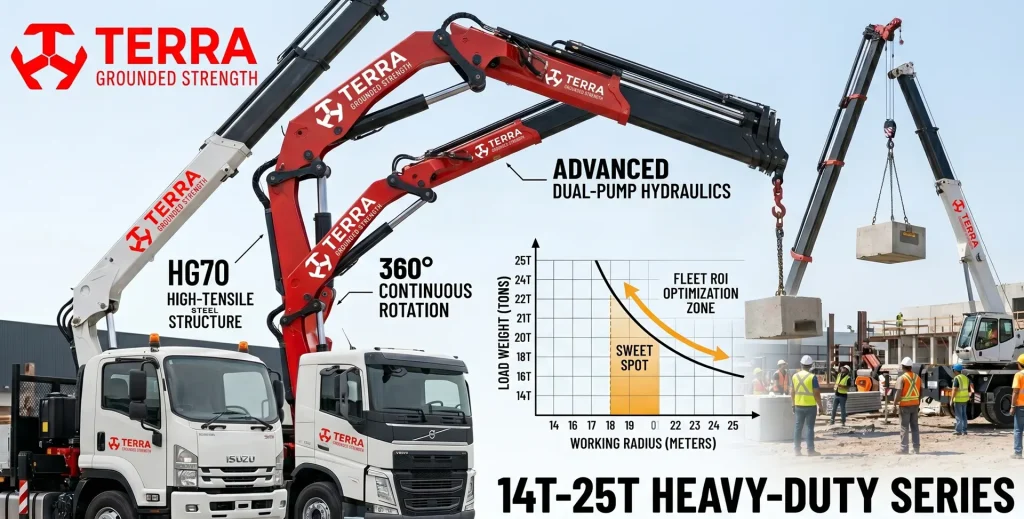
1. The Golden Rule: Load Weight vs. Working Radius When reading a manufacturer’s load chart, it is critical to understand that a “10-ton crane” refers to its maximum lifting capacity at its absolute shortest radius. As the hydraulic boom extends horizontally (increasing the working radius), the safe lifting capacity significantly decreases. Extending a boom too far with a heavy load can cause catastrophic equipment failure, leading to severe damage or legal liabilities. Always calculate your heaviest load at your farthest required reach before making a purchasing decision.
2. The 14T-25T Sweet Spot for 2026 While light-duty cranes under 10 tons remain popular for general urban agility, the 10–30 MT (Metric Ton) capacity range has emerged as the fastest-growing market segment, expanding at a 6% CAGR globally. This capacity range is ideal for handling heavy modular components in high-density environments.
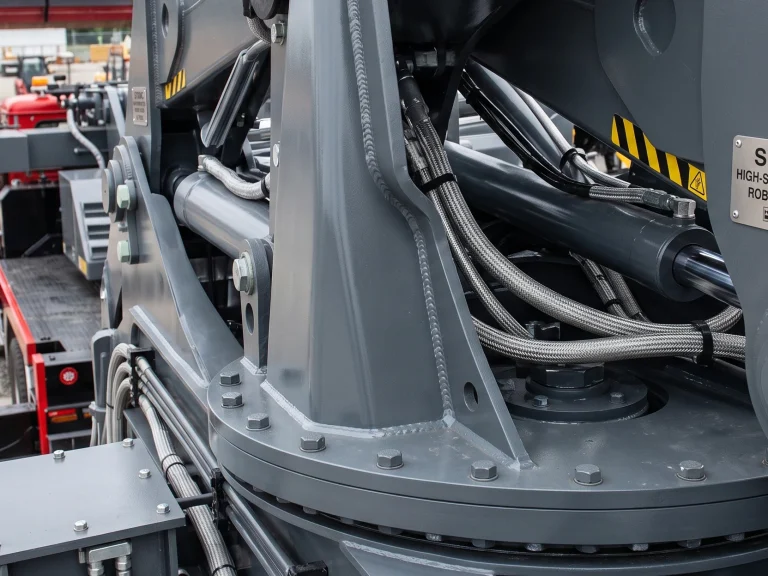
3. Maximizing Payload with HG70 Steel and Dual Pumps Choosing a higher capacity crane usually means a heavier boom, which reduces your truck’s available payload for cargo. Terra Crane solves this engineering challenge. Our 14T to 25T heavy-duty series utilizes high-strength HG70 steel, which maximizes your lifting capacity while maintaining a lightweight profile to ensure standard chassis compliance. Furthermore, our models feature a military-grade dual pump (Piston + Gear) combination, providing massive power and precise flow control for synchronized operations, drastically reducing engine wear and fuel consumption.
Recommended Crane Capacity by Application
| Capacity Range | Ideal Industry Applications | Terra Crane Advantage |
|---|---|---|
| Light Duty (2T – 5T) | Landscaping, signage installation, light municipal work. | Compact stowage, extremely fast setup times. |
| Medium Duty (6.3T – 12T) | General infrastructure, material delivery, warehousing. | Seamless integration with HOWO, Isuzu, and Shacman chassis. |
| Heavy Duty (14T – 25T) | Machinery relocation, heavy infrastructure, oil & gas. | HG70 steel booms with military-grade dual hydraulic pumps |
Q1: How does the working radius affect a truck crane’s lifting capacity?
A crane’s lifting capacity decreases as the boom extends further from the center column. For example, a 10-ton crane can only lift 10 tons at its shortest radius. If the boom is extended to 10 meters, its safe lifting capacity may drop to 2 tons. Always consult the manufacturer’s load chart
Why is the 14T to 25T capacity range considered the industry sweet spot?
The 14T-25T range provides the perfect balance for modern contractors. It offers sufficient heavy-lift capabilities for infrastructure and machinery relocation while remaining lightweight enough to be mounted on standard commercial truck chassis, keeping the vehicle road-legal without special permits
Why shouldn’t I just buy the largest capacity crane available?
Purchasing a crane with a much higher capacity than necessary increases your initial capital expense, fuel consumption, and maintenance costs. Additionally, a heavier crane reduces the remaining payload capacity of your truck bed. It is best to match your exact needs with lightweight, high-strength HG70 steel booms like those from Terra Crane