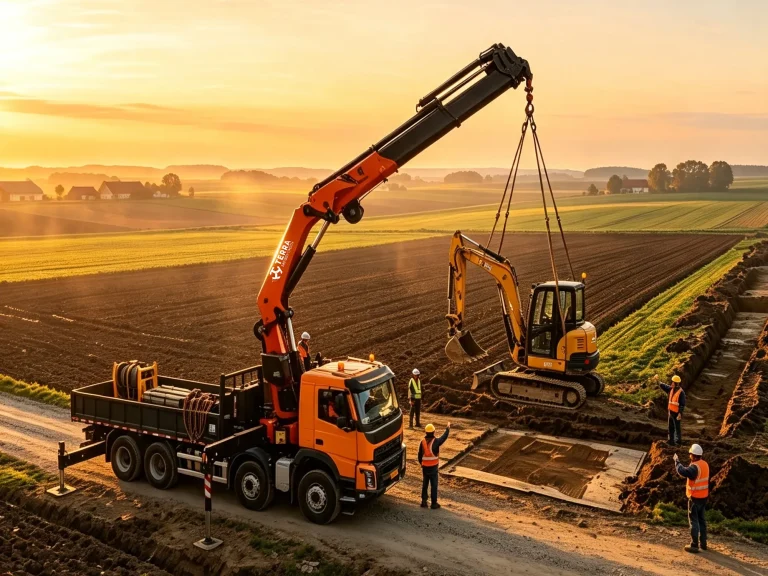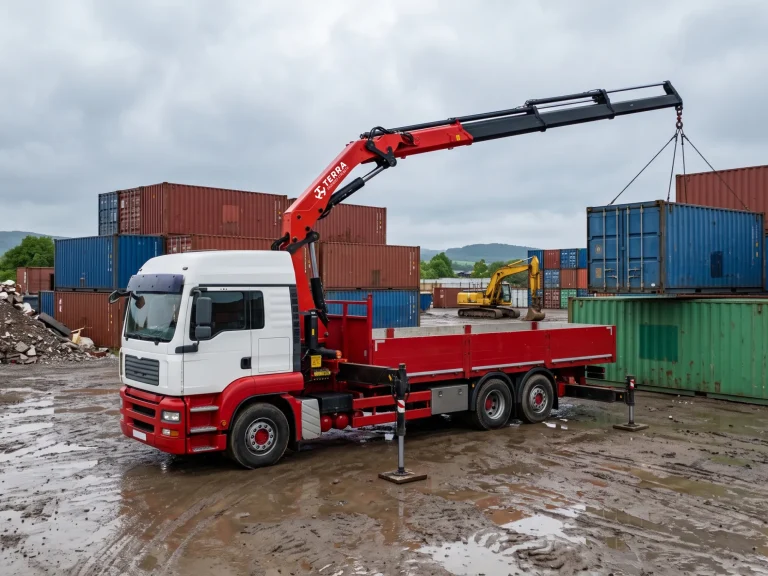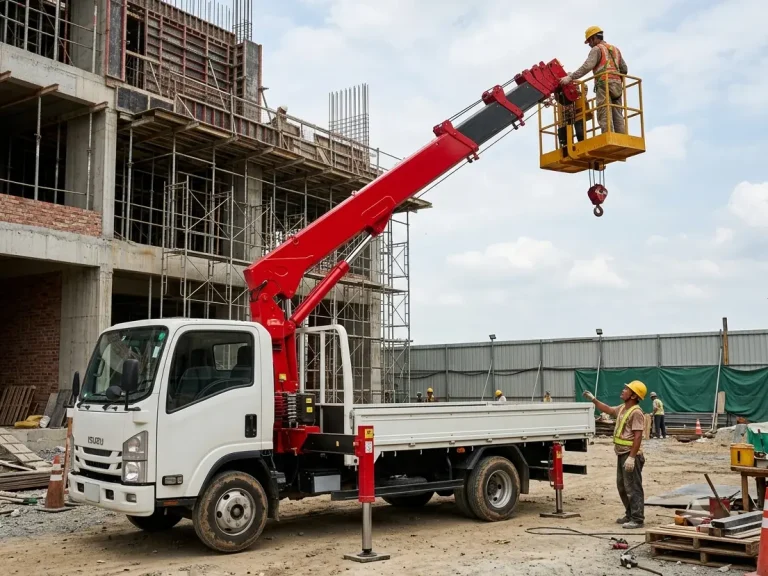
We are seeing a massive shift in 2026: contractors are dumping their oversized mobile cranes and moving to the 15-30 ton (10-30 MT) knuckle boom segment for urban infrastructure work. This capacity range provides enough heavy-lifting power for complex jobs while allowing the vehicle to remain road-legal without pulling special oversize permits. However, to truly maximize ROI in this sweet spot, buyers must look beyond raw tonnage and evaluate three critical factors: payload-eating deadweight, the “pump trap” of standard hydraulics, and stringent OSHA certification mandates.
“A 25-ton rig is a liability if it eats up your cargo capacity or sits in the yard due to compliance issues. At Terra Crane, we engineer our 15-30 ton heavy-duty series with HG70 steel and dual-pump hydraulics, ensuring you get maximum lifting power, road-legal mobility, and precise control even at engine idle.” — Chief Engineer, Terra Crane
1. The Deadweight Dilemma: Don’t Let Your Crane Eat Your Payload
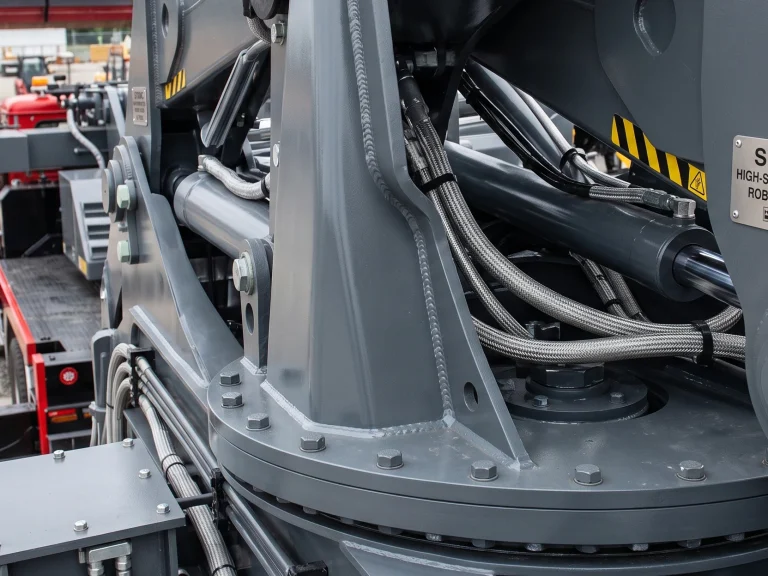
When sizing a rig in the 15-30 ton range, one of the most common mistakes is ignoring the crane’s tare weight. Deadweight eats payload. If the boom is manufactured using standard, heavy carbon steel, you lose a ton of cargo capacity on your flatbed just carrying the crane itself. To maximize the Total Cost of Ownership (TCO) of your fleet, look for cranes built with high-strength steel. Premium models from Terra Crane utilize HG70-grade high-strength steel paired with robotic welding. This drastically reduces the crane’s deadweight, minimizes boom deflection under extreme stress, and allows you to actually haul construction materials legally on standard commercial truck chassis.
| Feature | Standard 25-Ton Crane Setup | Terra Crane 15-30T Advantage | 2026 ROI Impact |
|---|---|---|---|
| Boom Material | Standard Carbon Steel | HG70 High-Strength Steel | Lower tare weight; maximizes legal cargo payload. |
| Hydraulic System | Single Gear Pump | Military-Grade Dual Pumps | High pressure at engine idle; zero load bouncing. |
| Operational Cost | High RPMs = High fuel burn | Variable Displacement Flow | Cuts diesel consumption and prevents system overheating. |
2. The Pump Trap: Gear Pumps vs. Dual Pump Setups
If you look under the paint of standard economy cranes, you will often find basic gear pumps. These traditional systems utilize interlocking gears to displace oil, meaning pressure is entirely dependent on engine speed. Standard gear pumps require you to rev the truck engine high to get enough lifting pressure, causing you to burn crazy amounts of diesel and generate massive system heat. The solution is a military-grade dual pump setup (such as a piston and gear pump combination). A dual-pump system features a variable-displacement mechanism that provides massive torque and precise high-pressure flow even at low engine idle. This guarantees that your drops will be millimeter-precise without bouncing the load, drastically improving both fuel efficiency and jobsite safety.
3. OSHA Subpart CC: The Compliance Reality Check
For contractors operating in the United States, regulatory compliance is now a major financial factor. Operating without current certification represents an unacceptable legal and financial risk. Under OSHA mandate 29 CFR 1926 Subpart CC, anything lifting over 2,000 lbs in construction requires a fully certified operator. Don’t buy a massive 25-ton rig just to have it sit in the yard because your crew isn’t ticketed. Ensure your operators have nationally accredited certification (such as NCCCO) and that your company provides the documented competency evaluations required by the latest 2026 regulations.
Ready to Maximize Your Urban Lifting Fleet?
The 15-30 ton capacity range is doing the heavy lifting for modern fleets. If you are ready to stop burning your budget on deadweight and inefficient hydraulics, Contact Terra Crane today for a custom chassis sizing consultation and upgrade to European-standard dual-pump technology.
Q1: Why are 15-30 ton knuckle boom cranes ideal for city work?
Answer: The 15-30 ton (10-30 MT) segment offers the perfect balance of heavy-lift capabilities for infrastructure components while remaining highly maneuverable in congested urban spaces. Most importantly, they can often remain road-legal without requiring special oversize transport permits.
Q2: What is the advantage of a dual hydraulic pump in a crane?
Answer: Standard gear pumps require high engine RPMs to generate pressure, burning excess fuel and creating heat. A dual pump setup (piston + gear) provides precise, high-pressure flow even at engine idle, giving operators millimeter-level precision without bouncing the load.
Q3: What does OSHA Subpart CC mean for boom truck operators?
Answer: Under OSHA 29 CFR 1926 Subpart CC, any power-operated equipment used in construction capable of lifting over 2,000 lbs requires a fully certified and qualified operator. Failure to comply can lead to massive fines and project shutdowns