When it comes to truck-mounted knuckle boom cranes (articulating cranes), lifting weight is only half the story. As Joseph Lin, Senior Specialist at TERRA CRANE, explains: “The perfect configuration must balance operational efficiency, legal weight limits, and chassis structural integrity.”
Since 2010, TERRA CRANE has been the go-to partner for logistics and construction firms across the globe. This guide, updated for 2026 industry standards, will help you make a smart investment.
1. Analyze Your Load Type (The Tooling First Approach)
Your cargo determines your attachments—and subsequently, your crane model.
- Bulk Machinery & Steel: A standard hydraulic hook is your primary tool.
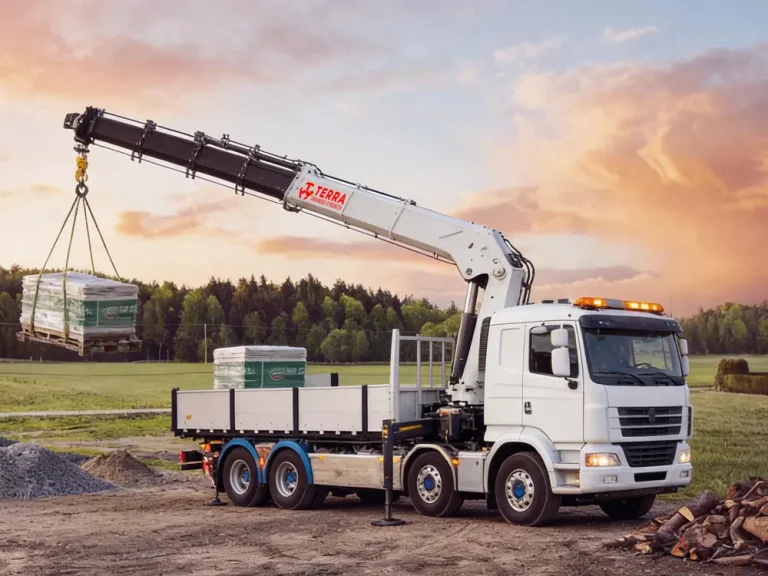
- Palletized Goods/Lumber: You must spec a hydraulic fork attachment. This ensures precision placement on rooftops or job sites.
- Scrap & Irregular Loads: Consider a grapple or custom hydraulic tooling.
💡 Joseph’s Pro Tip: TERRA cranes feature advanced Quick-Connect Hydraulic Couplers, allowing operators to switch from forks to hooks in under 120 seconds, maximizing billable hours.
2. Horizontal Reach vs. Vertical Height
In the crane world, Rated Lifting Moment (leveraged physics) is king.
| Lifting Scenario | Recommended Spec | Technical Logic |
| Close-range heavy lift (10 ft) | 5,000 lbs | Prioritizes chassis stability |
| Long-range delivery (30 ft) | 1,000 lbs | Requires larger crane structure for leverage |
- Horizontal Reach: The distance from the center of rotation to the drop point.
- Vertical Height: Critical for rooftop deliveries or clearing power lines.
3. The “Crane-First” Chassis Strategy
⚠️ Critical Error: Many buyers purchase a truck chassis first, only to realize the frame cannot handle the RBM (Resisting Bending Moment) of their desired crane.
- RBM Compliance: Your truck frame must withstand the torque generated at maximum reach.
- Legal Payload: Every pound of crane is a pound less of cargo. TERRA’s high-tensile steel designs offer the best strength-to-weight ratio in the market.
4. Configuration: Behind-the-Cab vs. Rear-Mount
Behind-the-Cab (BTC)
- Best For: Urban deliveries and tight city streets.
- Pros: Shorter overall vehicle length; better weight distribution for front axles.
Rear-Mount
- Best For: Construction sites and material yards.
- Pros: 360-degree lifting versatility; allows the crane to reach further over the back of the trailer.
5. FAQs: Expert Insights from Joseph Lin
(Note: Please use the Rank Math FAQ Block for this section to fix your GSC “Missing Field” error)
Q: What is the main advantage of a Knuckle Boom vs. a Stiff Boom crane?
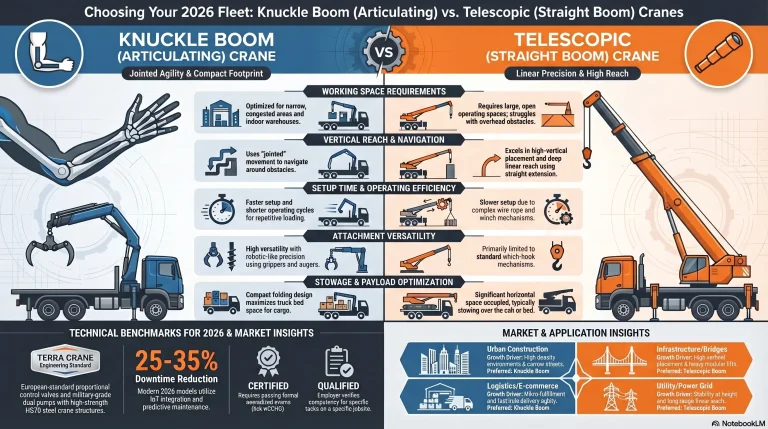
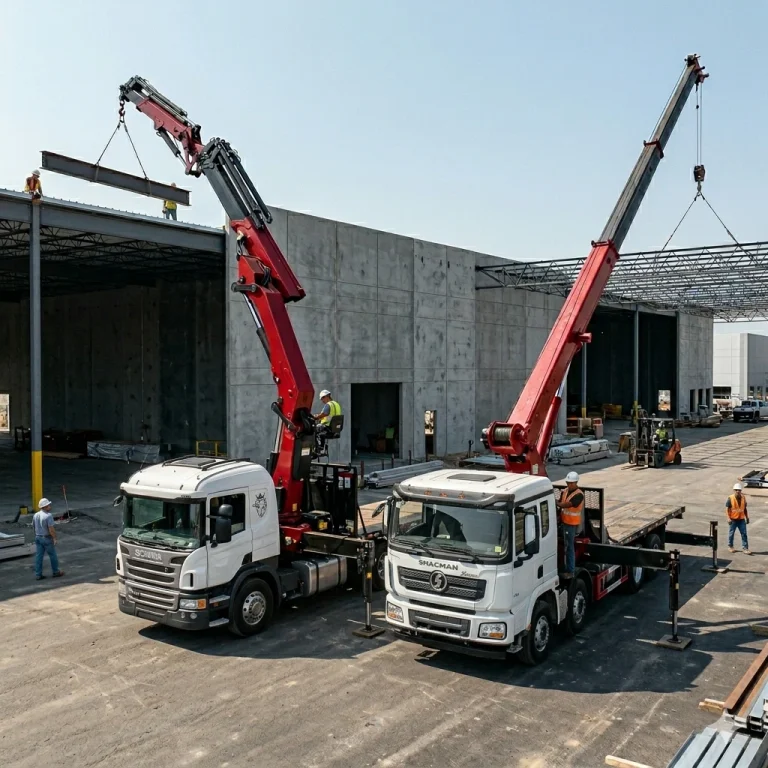
A: Flexibility. A knuckle boom (articulating crane) “folds” like a finger, allowing you to deliver loads into low-clearance areas (like inside a warehouse) where a stiff boom cannot reach.
Q: Do I need a CDL for a 5-ton TERRA truck-mounted crane?
A: This depends on your total GVWR (Gross Vehicle Weight Rating). If your combined truck and crane weight stays under 26,000 lbs, you may operate without a CDL in many jurisdictions. Always check local DOT regulations.
Q: How do I get a Load Chart for my specific TERRA model?
A: Contact Joseph Lin directly. We provide customized Lifting Capacity Maps based on your specific chassis and outrigger configuration to ensure 100% job site safety.
Ready to Scale Your Lifting Operations?
Don’t settle for “off-the-shelf” solutions. Consult with Joseph Lin and the TERRA engineering team for a free application review.